Ann Arbor and Washtenaw County
Wine Cellars in Ann Arbor, MI | Designed, Built and Commissioned
Ann Arbor Wine Cellars designs, builds and services custom wine cellars across Ann Arbor and Washtenaw County. Every cellar we build is engineered to hold one target: 55°F at 60% relative humidity, with no more than 1.5 degrees of drift a day. We calculate the heat load before quoting the equipment, we put the vapour barrier on the side of the insulation it belongs on, and we hold the finished room at temperature for several days before you put a single bottle in it.
Wine cellars Ann Arbor MI
Most wine cellar problems are invisible. A vapour barrier fitted to the wrong side of the insulation will condense inside the wall cavity and rot the framing over three or four years without ever showing a mark on the finished surface. A cooling unit selected from a bottle-count chart rather than a calculated heat load will cope until the first genuinely hot Michigan August. Neither failure is visible once the racking is in, which is precisely why both get skipped.
We build the envelope first and the beautiful part second. That means a calculated heat load against a 40 degree design differential for a 95 degree Washtenaw summer, closed-cell foam at R-6.5 to R-7 per inch, a continuous vapour plane with every penetration sealed individually, and a dedicated 20 amp AFCI and GFCI protected circuit. Then redwood, mahogany, steel or cable, depending on what the room and the house actually want.
What we build and service
Cellar types and styles
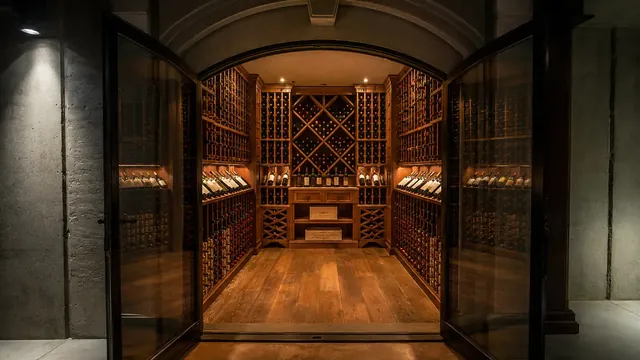
Custom Wine Cellars
Full custom cellars built to the room you have, from 300 bottles to 5,000.
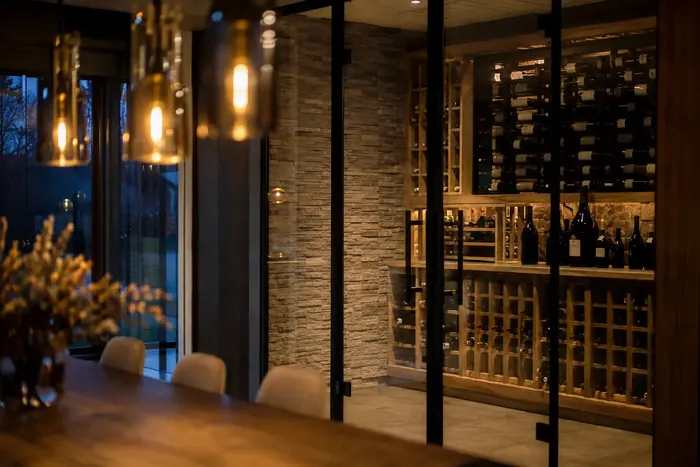
Wine Rooms
Above-grade wine rooms built off dining and living spaces, designed to be seen.
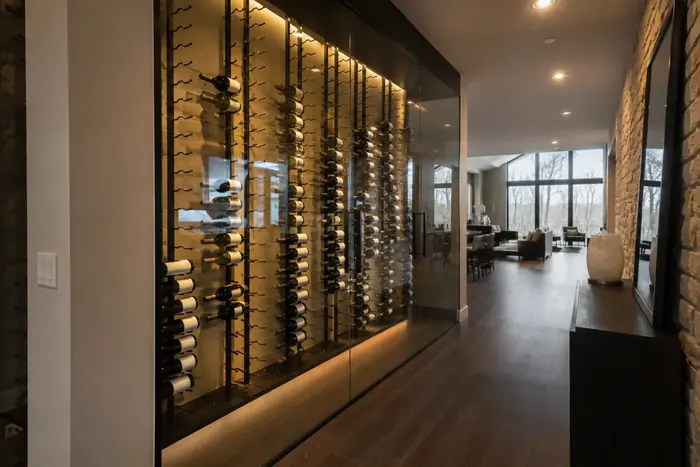
Glass-Enclosed Wine Cellars
Insulated glass enclosures that display the collection without wrecking the thermal envelope.
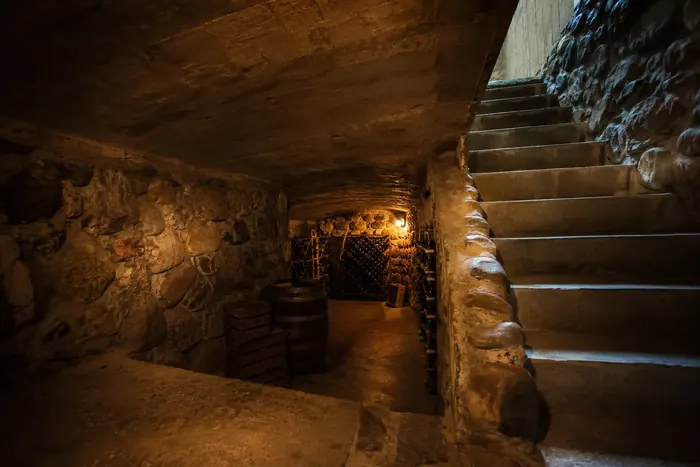
Underground Wine Cellars
Subterranean cellars built against Washtenaw clay, with drainage handled before framing.
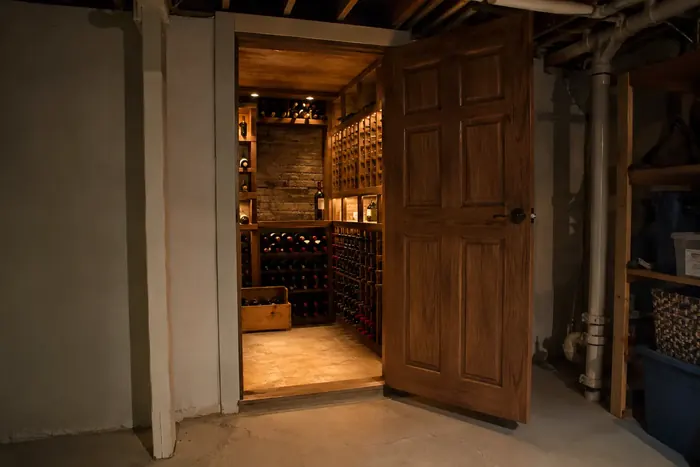
Wine Cellar Conversions
Closets, storage rooms and unfinished basement corners turned into sealed, cooled cellars.
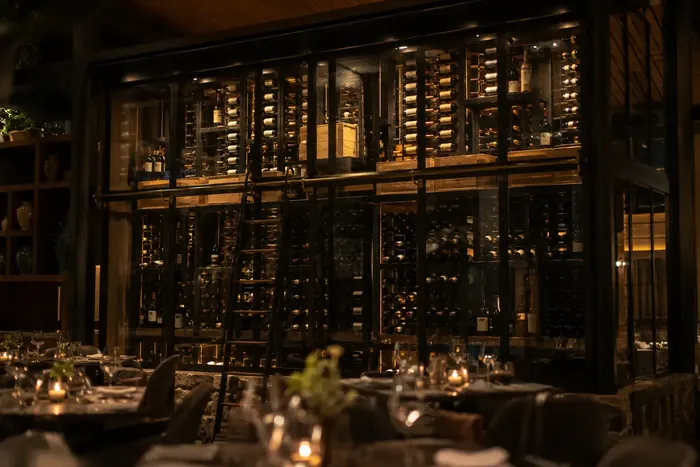
Commercial Wine Cellars
Restaurant, hotel and retail wine storage built for service volume and health inspection.
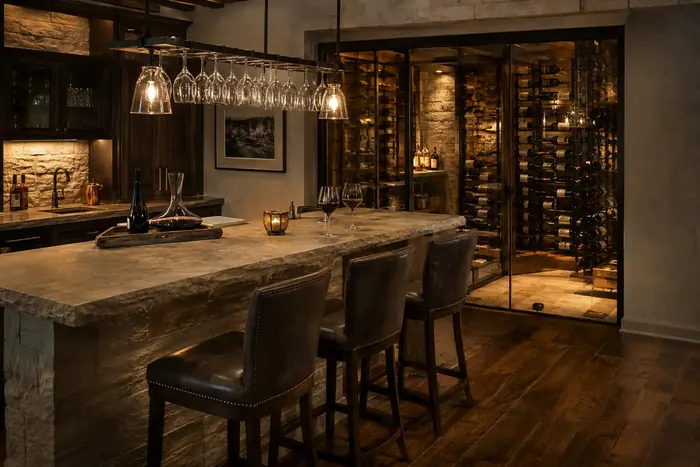
Wine Tasting Rooms
Rooms built for sitting and drinking rather than storing, with a warmer comfort zone.
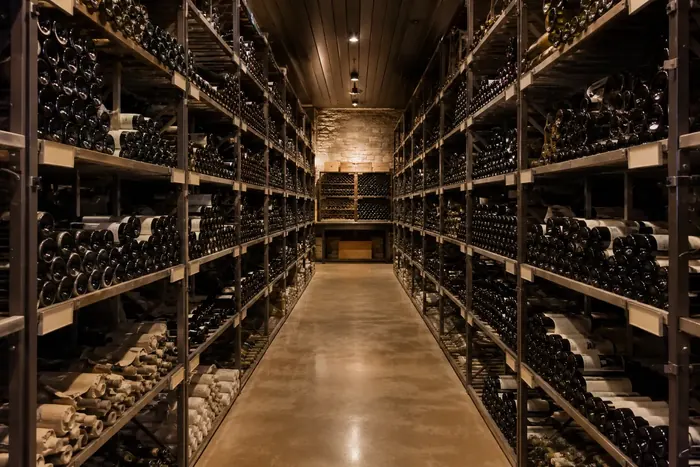
Climate-Controlled Wine Storage Rooms
Function-first storage rooms built for capacity and stability rather than display.
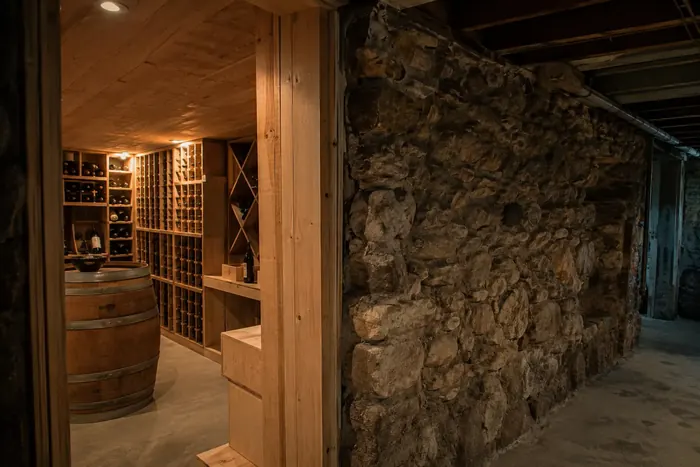
Wine Cellar Additions
Purpose-built cellar additions where there is no suitable existing space.
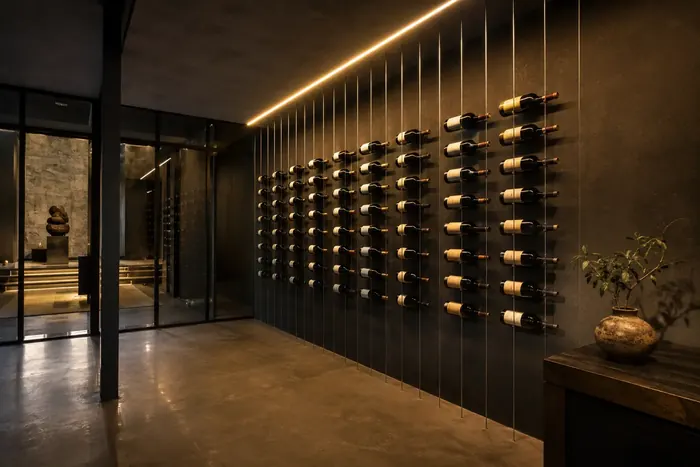
Modern & Contemporary Wine Cellars
Minimal cellars in steel, glass and concrete, where the bottles are the only ornament.
Core services
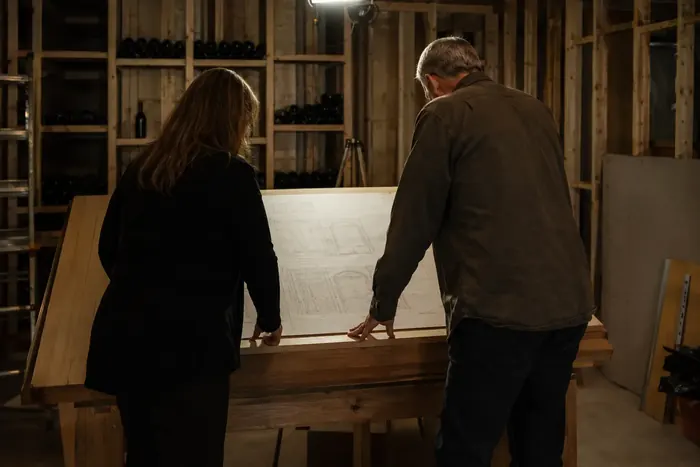
Wine Cellar Design & Build
One team from first survey to commissioning, with drawings you approve before anything is cut.
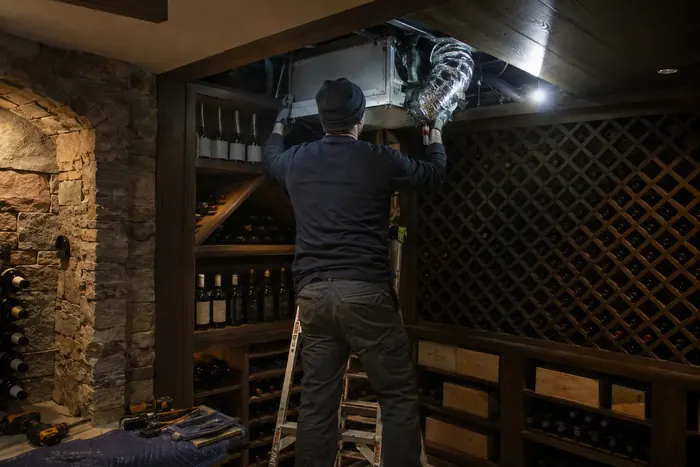
Wine Cellar Cooling System Installation
Self-contained, ductless split and ducted split systems, sized from a real heat load.
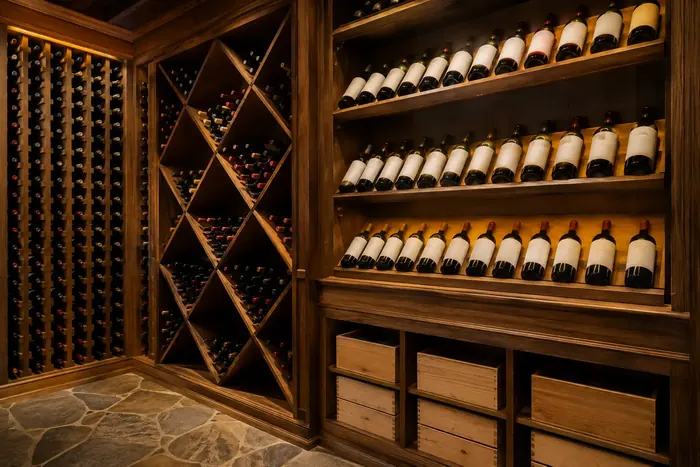
Wine Cellar Racking & Storage Systems
Individual bottle, diamond bin, case storage and display rows, mixed to how you actually buy.
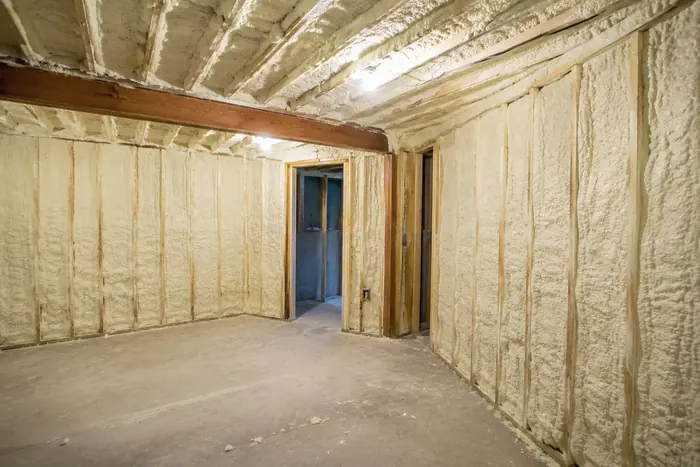
Wine Cellar Insulation & Vapor Barrier Installation
The envelope work that decides whether a cellar holds temperature or rots quietly.
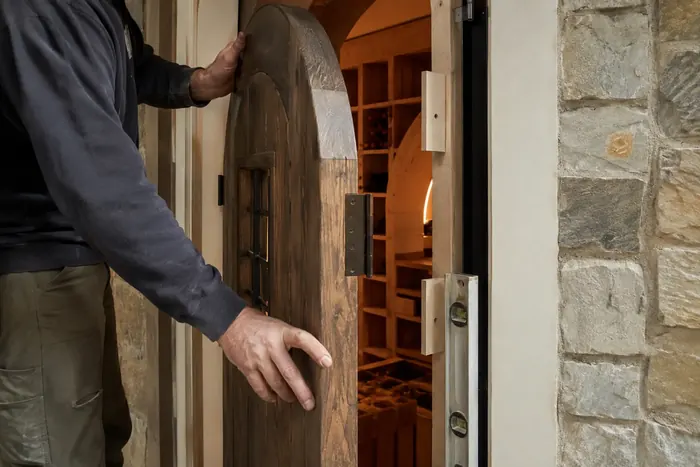
Wine Cellar Door Installation
Sealing doors with magnetic gaskets and drop seals, because an interior door will not do.
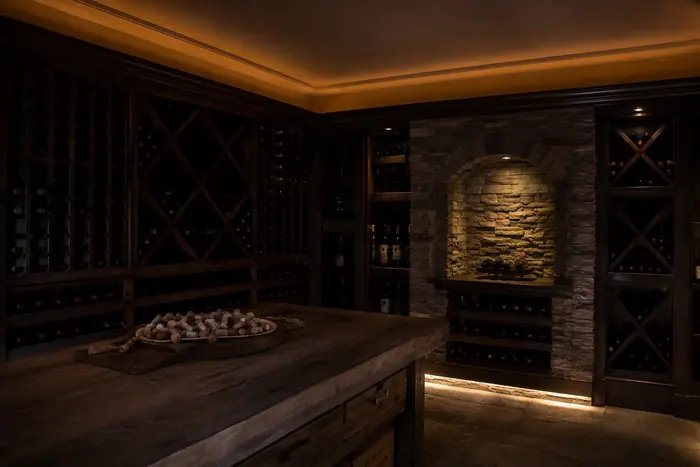
Wine Cellar Lighting Design
Layered LED at 2700K with zero UV and drivers kept outside the thermal envelope.
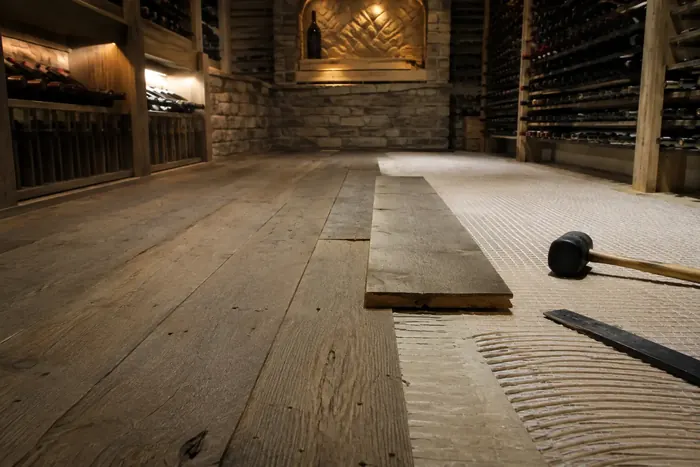
Wine Cellar Flooring Installation
Floors that survive 60 percent humidity, tested for slab moisture before anything is laid.
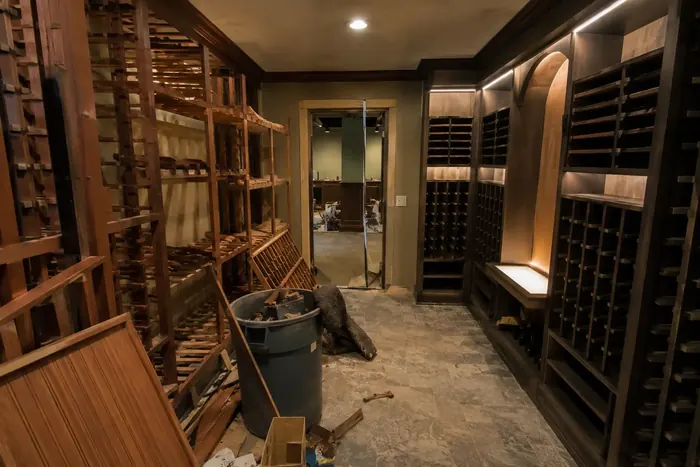
Wine Cellar Renovation & Remodeling
Bringing tired or badly built cellars up to standard, starting with what went wrong.
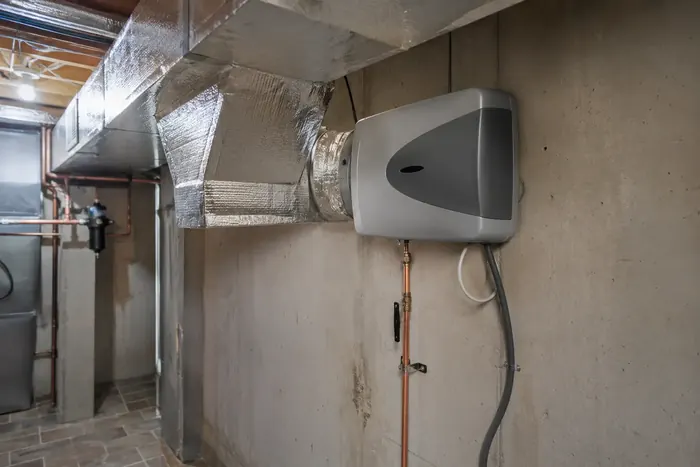
Wine Cellar Humidity Control Systems
Holding 60 percent relative humidity year round, in a climate that swings from 85 percent to bone dry.
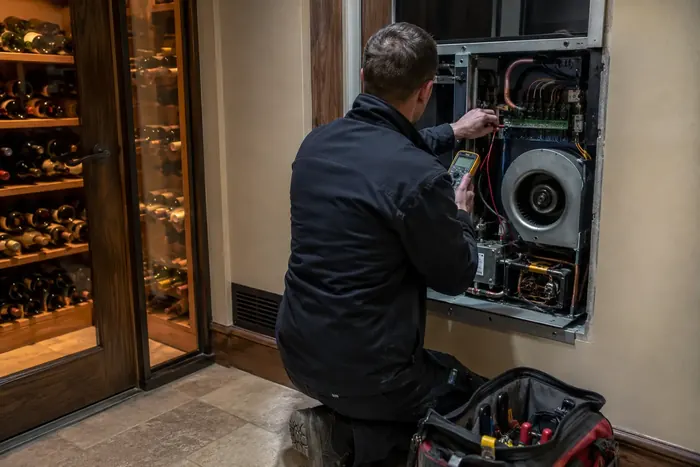
Wine Cellar Repair & Maintenance
Diagnostics, cooling repair and annual servicing for cellars we built and cellars we did not.
Specialty and materials
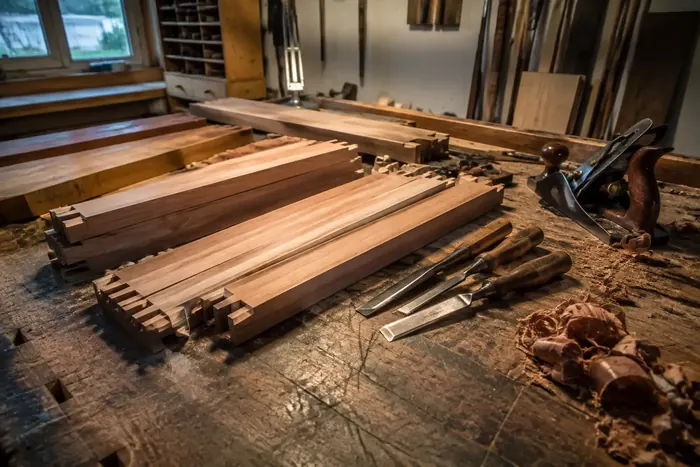
Custom Wood Wine Racking
All-heart redwood, clear cedar, white oak and mahogany, cut to the room and left to breathe.
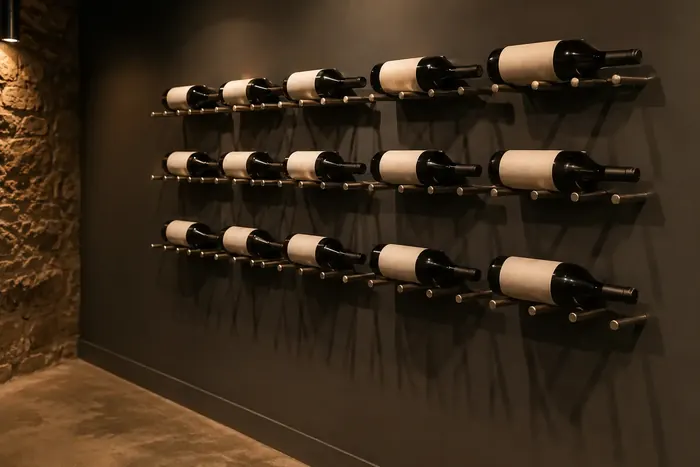
Metal & Modern Wine Racking Systems
Anodised aluminium peg systems that display labels forward and take up almost no visual space.
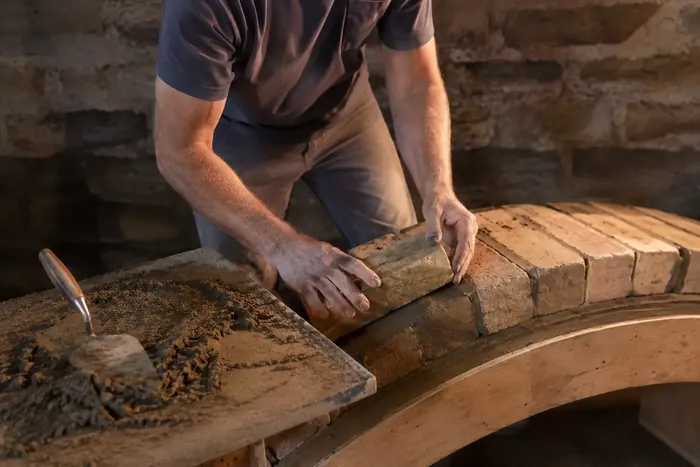
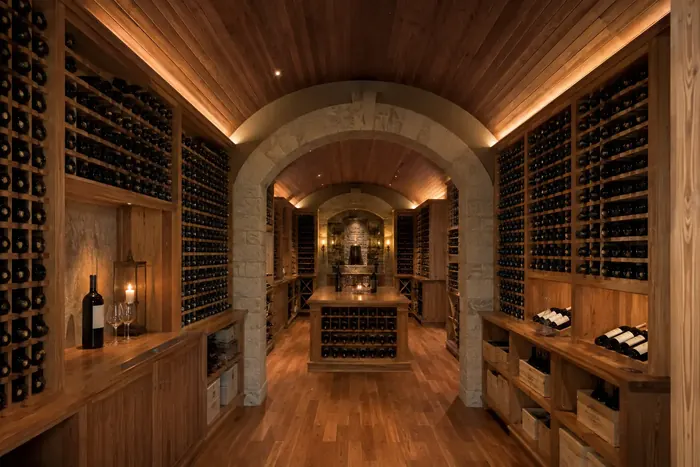
Stone & Brick Wine Cellar Construction
Masonry cellars in Michigan fieldstone and brick, including barrel-vault ceilings.
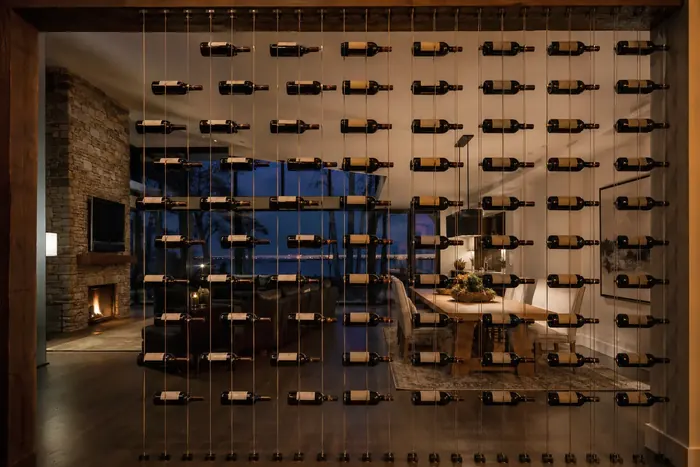
Wine Cellar Cable Wine Wall Systems
Tensioned 316 stainless cable with aircraft aluminium hubs, so bottles appear to float.
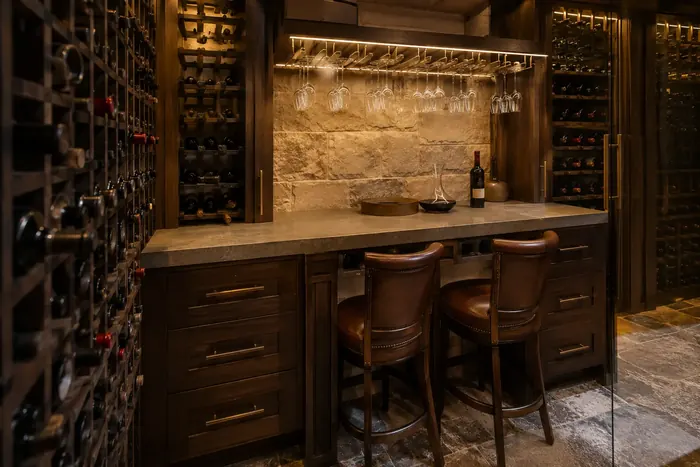
Wine Cellar Tasting Bar Installation
Built-in tasting counters with stone tops, glass storage and the plumbing done properly.
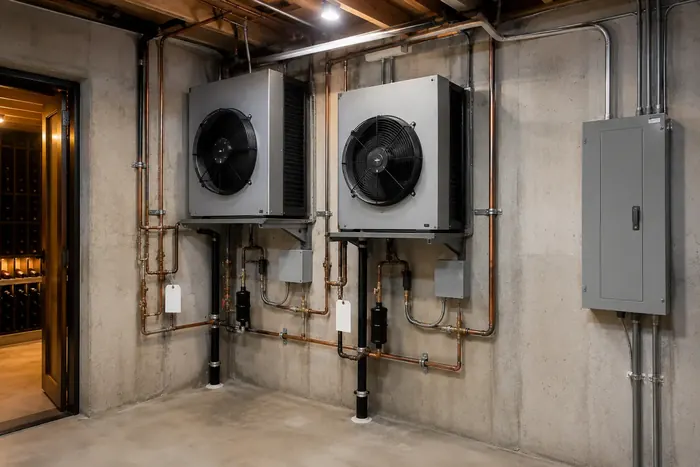
Wine Cellar Backup Cooling Systems
Redundant condensers, transfer switches and monitoring, for collections that cannot tolerate a failure.
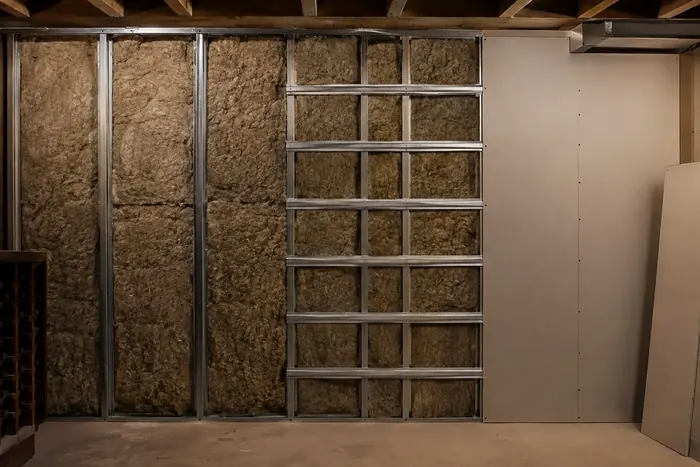
Wine Cellar Soundproofing
Decoupled wall assemblies for cellars under bedrooms or beside living space.
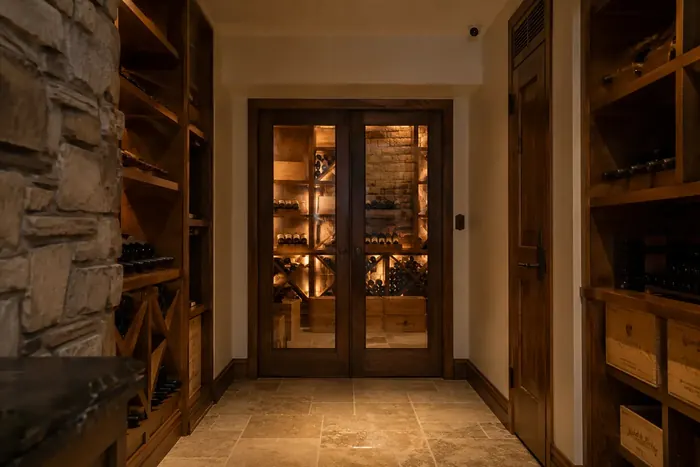
Wine Cellar Security System Installation
Access control, monitoring and documentation for collections your insurer wants to know about.
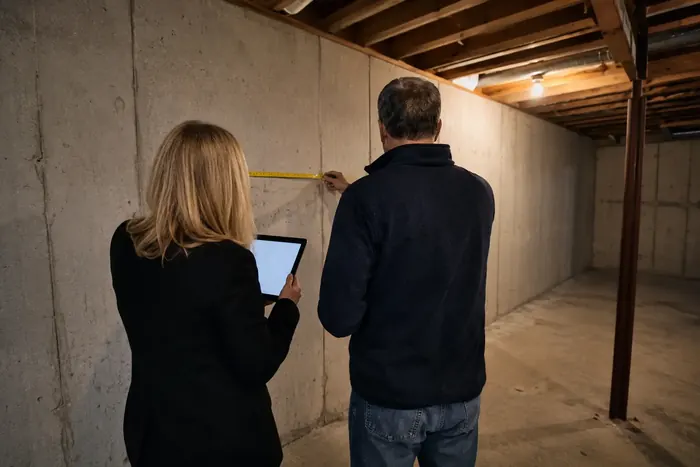
Wine Cellar Consultation & Planning
An honest assessment of what your space can become, before you commit to anything.
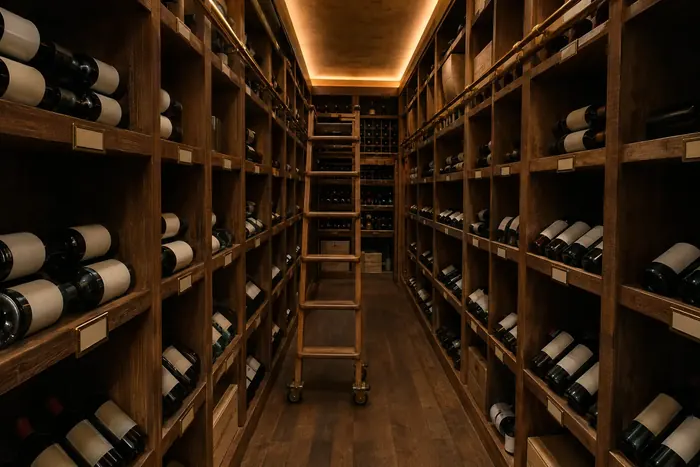
Wine Cellar Inventory & Storage Layout Design
Zoned, addressed layouts so you can find a specific bottle without moving twenty others.
Why the invisible work decides everything
We open a section of the envelope before quoting any renovation, because a cellar that will not hold temperature has a cause, and new racking installed over that cause simply hides it for three years. That exploratory work sometimes tells us the job is bigger than the client hoped, and we would rather say so at quote stage than discover it halfway through.
Every quote we issue states the calculated heat load and the specific cooling capacity we intend to install, itemised by trade rather than presented as a single figure. If you are comparing us against another builder, that document is the thing to compare, because it shows the reasoning rather than just the number.
- Heat load calculated on site before any equipment is specified
- Vapour barrier placed on the warm side, verified against actual room conditions
- Racking drawn to a survey that includes out-of-square walls, which most old basements have
- Every cellar held at temperature and logged for several days before you load it
The conditions every cellar is built to hold
Wine tolerates being held at a slightly wrong temperature far better than it tolerates being moved up and down, because repeated expansion and contraction works against the cork seal. These are the numbers we commission every cellar against, and the reasons behind them.
| Condition | Target | Why it matters | What happens outside it |
|---|---|---|---|
| Temperature | 55°F (12.7°C) | Sits mid-range, leaving room to drift either way without approaching a damage threshold | Above 70°F reaction rates accelerate and volatile aromatics are lost. Below 45°F tartrates precipitate out of suspension. |
| Daily drift | 1.5°F maximum | Stability matters more than the set point. A room averaging 55°F while swinging five degrees is still working the corks twice a day | Repeated expansion and contraction breaks down the seal between cork and glass over years. |
| Relative humidity | 60% (55-70% band) | Keeps natural cork swollen against the bottle neck | Below 50% cork dries, shrinks and raises oxygen transmission. Above 75% labels degrade and mould grows on porous surfaces. |
| Wall insulation | R-19 minimum | Determines how hard the cooling has to work against a 40°F summer differential | An under-insulated envelope means a unit running continuously and still losing ground in August. |
| Vapour control | Continuous, warm side | Stops summer air at a 70°F dew point condensing inside the wall cavity | Hidden condensation causes stud decay and mould inside the assembly, invisible until the framing is gone. |
| Light | LED, 2700K, zero UV | Ultraviolet degrades wine through clear and green glass alike | Halogen and incandescent add heat directly to the room and expose bottles to UV. |
Those six lines are the whole brief. Everything else we do, from the species of timber in the racking to where the condenser sits, exists to hold them steady for the next thirty years.
How a cellar build runs
Free consultation
We measure the room, check the floor construction, find your panel and identify where heat can be rejected. About an hour, anywhere in the county, at no cost.
Design and calculate
You get rack elevations, a materials schedule and a mechanical plan, plus a written quote stating the calculated heat load and cooling specification.
Build the envelope
Framing, insulation, vapour control, the dedicated circuit and the cooling install all happen before a single rack section goes in.
Commission and hand over
Racking is installed and finished, then the cellar runs at temperature for several days while we log stability before you load it.
Common questions
How much does a wine cellar cost in Ann Arbor?
It depends on the envelope you have to build, whether the room is meant to be seen, and how far the heat has to travel. Those three drive most of the total.
Rather than publish figures that would not survive contact with your basement, we have set out exactly what moves the number in our Washtenaw County cost guide.
What size cooling unit will I need?
It is calculated from the envelope, not the bottle count. We size against a 95 degree summer ambient and a 55 degree target, giving a 40 degree design differential.
The full formula and a worked example are in our cooling sizing guide, including how to choose between self-contained, ductless and ducted split systems.
Do I need a permit for a wine cellar?
The electrical and mechanical elements usually do, and a cellar addition always does. A dedicated 120V 20 amp circuit with AFCI and GFCI protection is a code requirement, not an upgrade.
Our permits and codes guide covers the 2021 Michigan Residential Code, the 2023 NEC requirements and when historic district review applies.
How long does a wine cellar take to build?
A conversion of an existing basement room typically runs two to three weeks. A full custom build with ducted cooling and hardwood racking runs five to seven weeks.
Additions are different, at three to six months, and the permit and review phase is frequently longer than the construction.
Do you service cellars you did not build?
Yes, and a good portion of our maintenance work is on rooms built by others. We do not require any history with the cellar.
The most common call is a cellar running warm, and the most common cause is a condenser coil that has never been cleaned.
What temperature and humidity should a wine cellar hold?
Fifty-five degrees Fahrenheit at 60 percent relative humidity, with a daily drift of no more than 1.5 degrees and humidity staying inside a 55 to 70 percent band.
The limits that matter are below 50 percent humidity, where cork dries and loses its seal, and above 75 percent, where labels degrade and mould can grow on porous surfaces.
Do you offer free quotes?
Yes. The consultation, the site measure and the written quote are all free with no obligation, anywhere in Washtenaw County.
The quote includes a calculated heat load and a stated cooling specification rather than a single lump figure. Call 734-415-4984 to arrange a visit.
Start with an hour on site
We will measure the room, calculate the load and tell you honestly what it can hold. No cost, no obligation.