
Specialty and materials
Wine Cellar Soundproofing in Ann Arbor, MI | Keeping the Compressor Out of the Bedroom
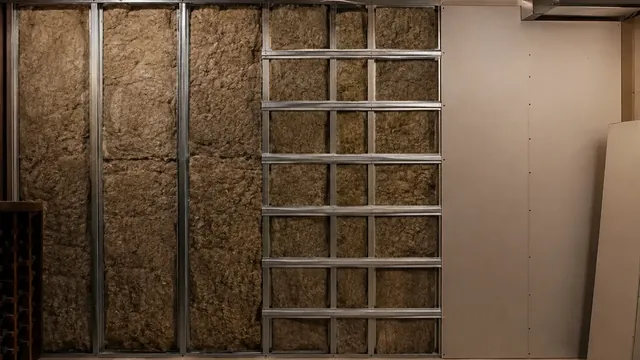
Cellars make noise, and where that noise ends up depends on how the walls were built. Ann Arbor Wine Cellars builds acoustically treated cellar assemblies using mineral wool in the cavity, resilient channel to decouple the drywall from the framing, and a second layer of board where the situation demands it. The equipment is usually the source, but a tasting room full of hard surfaces is a close second, and the two need different treatment. Decoupling addresses structure-borne vibration, absorption addresses airborne sound, and confusing the two is why most soundproofing disappoints.
Wine Cellar Soundproofing Ann Arbor MI
There are two entirely different noise problems in a cellar. One is a compressor humming through the structure into a bedroom above. The other is a hard room that makes conversation exhausting. Neither fix helps the other.
- Structure-borne vibration addressed by decoupling rather than by adding mass alone
- Mineral wool in the cavity rather than fibreglass where absorption matters
- Perimeter junctions sealed with acoustic sealant, not left open
- Equipment isolated on anti-vibration mounts at source
Adding mass and adding decoupling do different jobs. A second layer of drywall raises the wall's resistance to airborne sound. Resilient channel breaks the physical path that lets vibration travel from a stud into the board and out into the room beyond. A compressor mounted rigidly to a stud wall transmits through the structure regardless of how many layers of board are on it.
The usual approach
A second layer of drywall screwed straight onto the same studs, adding mass to a wall that is still rigidly connected to the vibrating equipment.
How we do it
Equipment isolated at source, the cavity filled with mineral wool, and the board hung on resilient channel so the vibration path is broken.
Acoustic specification
- Cavity
- Mineral wool
- Decoupling
- Resilient channel
- Perimeter
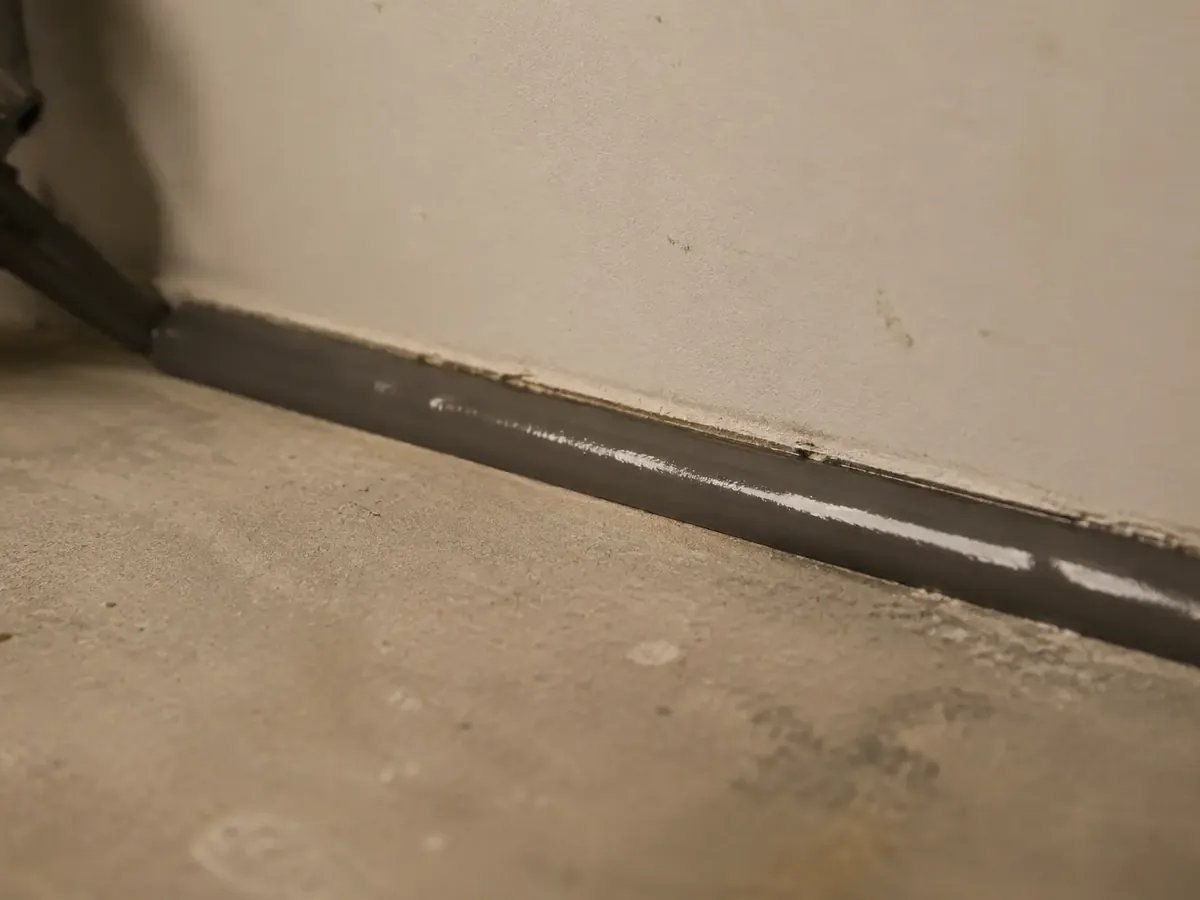
- Acoustic sealant, continuous
- Equipment
- Anti-vibration mounted
What actually matters in cellar soundproofing
Acoustic assemblies are a chain, and the weakest link sets the performance. A carefully built wall with an unsealed perimeter gap performs like a wall with a hole in it, because acoustically it is one.
- Structure-borne noise travels through rigid connections, so isolating the equipment at its mounting is more effective than any amount of added mass downstream of it.
- Mineral wool performs better than fibreglass for acoustic absorption at the frequencies compressors produce, and it is the correct specification in an acoustic cavity.
- An unsealed gap at the perimeter of an assembly leaks sound at a rate wildly out of proportion to its size, which is why continuous acoustic sealant is not an optional refinement.
- Reverberation inside a hard-surfaced cellar is a separate problem from transmission out of it, and needs absorptive surfaces inside the room rather than better walls.
Soundproofing during construction adds a modest amount to the wall assembly cost. Retrofitting it means removing finishes and rebuilding the wall, which is several times the price for the same result.
The cheapest genuinely effective intervention is almost always isolating the equipment at source and relocating the compressor outside the living envelope, which frequently removes the problem without touching a wall.
Before we soundproof your cellar
Acoustic work is much cheaper during construction than after, and it needs the problem defined precisely before anything is specified.
- Identify exactly where the noise is being heard and what it sounds like. A low hum in a bedroom above is a structure-borne problem, while conversation carrying through a wall is an airborne one, and they get different treatments.
- Note what is directly above and beside the cellar. A bedroom above the cellar ceiling is the case that most often justifies a full decoupled assembly, and it is worth knowing before framing.
- Check how the cooling equipment is currently mounted if this is a retrofit. Rigidly screwed to a stud wall is common and is frequently the entire problem.
- Accept that acoustic assemblies eat space. Resilient channel and a second board layer add depth to every treated wall, and in a small cellar that is real lost storage.
Sometimes the answer is moving the equipment, not the wall.
Our cooling sizing guide covers split system options that put the compressor outside the house entirely.
How your wine cellar soundproofing project works
Diagnose the path
We establish whether the noise is structure-borne or airborne, because the two require entirely different assemblies.
Treat at source
Equipment is isolated on anti-vibration mounts or relocated, since fixing the source is more effective than blocking the path.
Build the assembly
Mineral wool, resilient channel and additional board layers are installed as required, with every perimeter junction sealed continuously.
Verify by listening
We run the equipment and listen in the affected room, then adjust, because acoustic performance is judged where the problem was reported.
Wine Cellar Soundproofing questions we get asked
Why can I hear my cellar in the bedroom above?
Almost always structure-borne vibration from the cooling equipment travelling through the framing. Compressors produce low frequency vibration that passes through rigid connections very efficiently.
The fix is usually isolating or relocating the equipment rather than adding material to the ceiling.
Will more insulation make the cellar quieter?
Not on its own. Insulation absorbs airborne sound within a cavity but does nothing about vibration travelling through the framing, which is the more common cellar problem.
Decoupling the board from the studs with resilient channel is what addresses that path.
Do I need to be present while you soundproof my cellar?
For the initial diagnosis, ideally, because you can point at exactly where and when you hear the problem. That information shortens the work considerably.
The construction itself does not need you there.
Do you offer free quotes for wine cellar soundproofing?
Yes. For retrofit acoustic work we will always tell you first whether relocating the equipment would solve it more cheaply, because it very often would.
Call 734-415-4984 to arrange a visit.
Does soundproofing affect the thermal envelope?
It interacts with it, and both have to be designed together. Mineral wool has some thermal value, and a decoupled assembly changes where the vapour barrier can sit.
Getting acoustic and thermal design to coexist is straightforward if it is planned, and a mess if the acoustic work is added afterwards.
Can you make the cellar itself quieter to be in?
Yes, and that is a different job. A cellar full of stone, glass and hard millwork reverberates, which makes conversation tiring during a long tasting.
Adding absorptive surfaces inside the room, whether an upholstered element, a fabric panel or an acoustic ceiling detail, fixes it without affecting the walls.
Will soundproofing help with noise from outside the cellar?
It works in both directions, yes. A decoupled assembly built to keep compressor noise out of a bedroom above also keeps footfall and conversation from that room out of the cellar.
That matters most for tasting rooms rather than pure storage. If you plan to spend evenings in the room, treating the ceiling for impact noise from above is usually worth more than treating the walls.
What goes wrong, and what we do instead
Most soundproofing disappoints because the wrong problem was treated.
| The mistake | What it causes | What we do instead |
|---|---|---|
| Mass added to a wall still rigidly connected | Vibration travelling straight through the studs regardless of layers | Decouple with resilient channel so the physical path is broken |
| Equipment bolted directly to framing | Low frequency vibration transmitted efficiently into the room above | Isolate at source on anti-vibration mounts, or relocate the compressor |
| Perimeter junction left unsealed | An assembly performing as though it has a hole in it | Continuous acoustic sealant at every junction |
Fix the path, not just the wall
We will diagnose whether it is vibration or airborne sound before recommending anything.