
Core services
Wine Cellar Insulation & Vapor Barrier Installation in Ann Arbor, MI | The Layer That Decides Everything
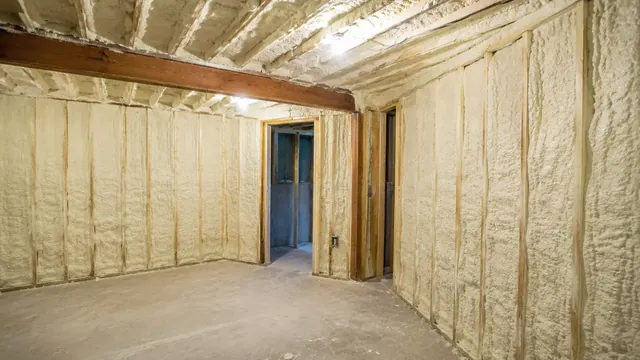
This is the work nobody sees and everybody depends on. Ann Arbor Wine Cellars installs cellar envelopes to two standards: closed-cell polyurethane spray foam at 2 pound density, giving R-6.5 to R-7 per inch and acting as its own seamless vapour barrier at 2 inches or more, or fibreglass and rigid board wrapped in a continuous 6 to 10 mil polyethylene barrier. Either way the vapour barrier goes on the warm side of the insulation, which in a conditioned Michigan basement is the side facing your living space, not the side facing the soil.
Wine Cellar Insulation and Vapor Barrier Ann Arbor MI
Get the barrier on the wrong side and you build a condensing surface inside your wall cavity. It will not show for two or three years, and by then the studs are gone.
- Vapour barrier on the warm side, verified against the actual room conditions
- Closed-cell foam at 2 inches minimum where it doubles as the barrier
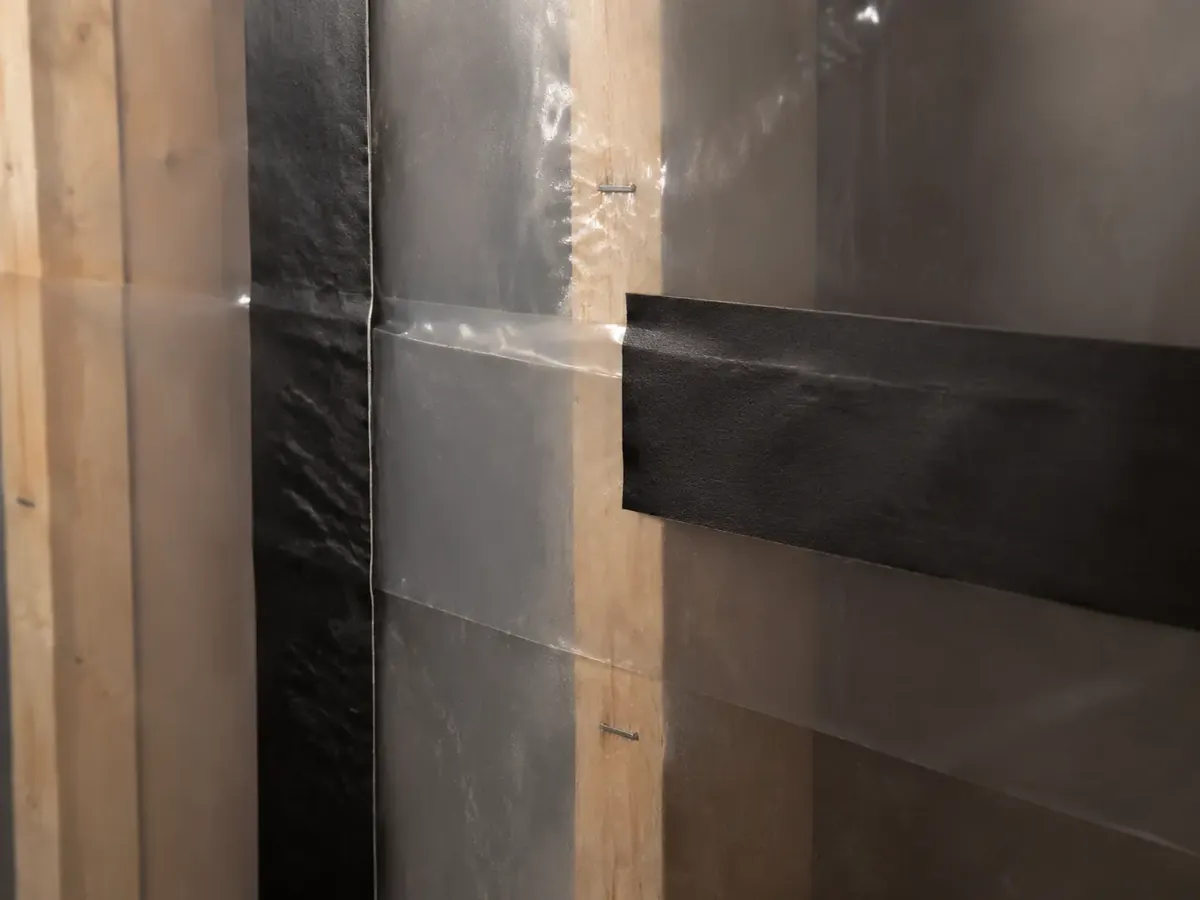
- Poly seams overlapped 12 inches and sealed with high-tack butyl tape
- Every penetration sealed individually, including wiring and sensor runs
Average summer dew point in Washtenaw County regularly reaches 70 degrees. When unconditioned air at that dew point reaches a 55 degree cellar wall surface inside a stud cavity, water condenses immediately. That is the mechanism behind hidden dry rot, stud decay and Stachybotrys growth in wall assemblies, and it is entirely preventable with a correctly placed continuous barrier.
The usual approach
Fibreglass batts pushed into the bays with a poly sheet stapled on whichever side was easier to reach, seams unsealed, and the electrical penetrations left open.
How we do it
A continuous barrier on the warm side with 12 inch lapped seams sealed in butyl tape, and every wire, pipe and sensor penetration sealed individually.
Envelope specification
- Foam density
- 2 lb closed-cell
- Wall target
- R-19 minimum
- Ceiling target
- R-30 to R-38
- Seam overlap
- 12 in, butyl taped
What actually matters in the envelope
An envelope is only as good as its continuity. A barrier that is 98 percent complete does not perform at 98 percent, because vapour concentrates through the gaps that remain.
- Closed-cell foam at 2 inches or more functions as both insulation and vapour barrier simultaneously, which eliminates the interstitial condensation risk rather than managing it.
- Fibreglass batts have no vapour resistance of their own, so they depend entirely on a separate continuous poly wrap across studs, ceiling joists and the floor perimeter.
- Ceilings need more insulation than walls, R-30 to R-38 against R-19, because warm air collects against them and the temperature difference there is greatest.
- In a basement cellar the warm side is the interior drywall face toward the house, which is counterintuitive to anyone used to above-grade construction where the warm side is inside.
Closed-cell foam costs meaningfully more per square foot than batts and poly, and it is what we recommend in nearly every case because it removes an entire failure mode rather than mitigating it.
The batt and poly route is defensible where budget is tight and the room is above grade with low humidity on both sides. Below grade in Washtenaw clay, the extra cost of foam is the cheapest insurance in the project.
Before we insulate your cellar
Insulation buries everything behind it permanently, so the preparation is entirely about making sure nothing that needs to be reachable ends up sealed in.
- Finalise every wire run first. Lighting circuits, sensor cables, speaker wire and security cabling all have to be pulled before foam goes in, because adding one afterwards means cutting the envelope open.
- Confirm no plumbing runs through the walls being foamed. A supply line encased in closed-cell foam is effectively unserviceable, and a leak inside a foamed cavity is invisible until it is severe.
- Vacate the basement for the spray day and plan to stay out for 24 hours. Closed-cell foam needs ventilation and a clear cure period, and the crew will be in respirators.
- Decide where the sensor will live. The thermostat sensor position determines what the system actually controls to, and it must not sit behind racking or above a supply grille.
Envelope work has code implications in Michigan.
Our permits and codes guide covers the 2021 Michigan Residential Code requirements for thermal envelope work.
How your wine cellar insulation & vapor barrier installation project works
Assess conditions
We establish the temperature and humidity on both sides of every surface so the vapour barrier goes on the correct face for that specific wall.
Rough in first
All electrical, sensor and any other cabling is pulled and inspected before insulation work begins, because nothing can be added afterwards.
Insulate and seal
Foam is sprayed to depth or batts and poly are installed with lapped and taped seams, and every penetration is sealed individually.
Verify continuity
The completed envelope is checked surface by surface for gaps before anything is closed up, since this is the last opportunity to see it.
Wine Cellar Insulation & Vapor Barrier Installation questions we get asked
Which side does the vapour barrier go on?
The warm side, always. In a conditioned Michigan basement that is the side facing your living space, because that is where the warm humid air is coming from in summer.
This trips people up because in above-grade construction in a cold climate the warm side is the interior. In a cellar the cellar is the cold side, so the barrier faces outward toward the house.
Can I insulate a cellar without spray foam?
Yes. Fibreglass batts in 2x6 framing reaching R-19, with rigid board and a continuous 6 mil poly wrap, is a valid assembly and we build it where it suits the budget.
It demands far more care at the seams, because the poly is doing all the vapour work by itself rather than being backed up by the insulation.
Do I need to be present while you insulate?
No, and for spray foam you actively should not be. The basement needs to be vacated during application and for about 24 hours afterwards while it cures and ventilates.
We coordinate that day with you in advance so it does not come as a surprise.
Do you offer free quotes for insulation and vapor barrier work?
Yes, and this is one area where we will always tell you which assembly we recommend and why, with both options priced so you can see the difference.
Call 734-415-4984 to arrange a survey.
What if my cellar already has insulation that failed?
We strip it back to structure and look at what the moisture did. Wet fibreglass, black staining on the studs or soft wood all mean the assembly was condensing internally, and that needs establishing before rebuilding.
Rebuilding over a failed envelope simply restarts the same clock.
How thick does the foam actually need to be?
Two inches is the minimum for it to function as a vapour barrier, and that gives you roughly R-13. To reach an R-19 wall target we typically spray closer to three inches.
Ceilings get more, since R-30 to R-38 needs about five to six inches of closed-cell foam.
What goes wrong, and what we do instead
This is the layer nobody sees, and it fails quietly for years before anything shows.
| The mistake | What it causes | What we do instead |
|---|---|---|
| Vapour barrier on the cold side | A condensing surface inside the wall cavity, rotting studs invisibly | Barrier on the warm side, verified against the actual room conditions |
| Poly seams stapled but not sealed | Vapour concentrating through the gaps, so the barrier performs far below spec | Seams lapped 12 inches and sealed with high-tack butyl tape |
| Electrical penetrations left open | A direct vapour path through an otherwise sound envelope | Every wire, pipe and sensor penetration sealed individually |
Get the layer nobody sees exactly right
We will tell you which side the barrier belongs on for your specific room, and why.