Core services
Wine Cellar Racking & Storage Systems in Ann Arbor, MI | Built Around How You Buy
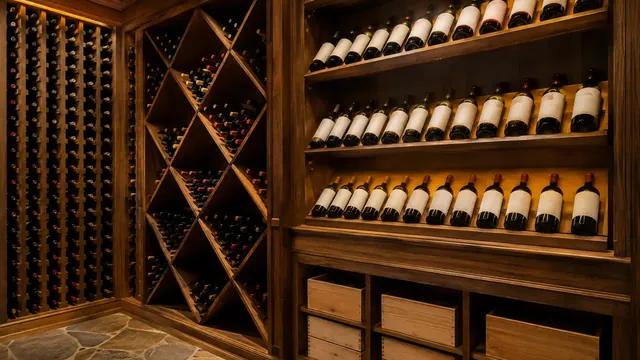
Racking is where a cellar either works for how you actually buy wine or quietly annoys you for twenty years. Ann Arbor Wine Cellars designs racking as a mix rather than a single system, because most collections are a mix: individual bottle columns for wines you pull one at a time, diamond bins for volume, horizontal display rows for the labels you want visible, and proper case storage for the wine that arrives twelve at a time and should not be unpacked. Every full 750ml bottle weighs about 3.0 pounds, so the layout is a structural decision as much as an aesthetic one.
Wine Cellar Racking and Storage Systems Ann Arbor MI
The most common racking regret is uniformity. A wall of identical individual-bottle columns looks orderly and stores a fraction of what a mixed layout would in the same space.
- Racking mix set by your actual buying pattern, not a standard layout
- Large-format and magnum positions designed in rather than improvised
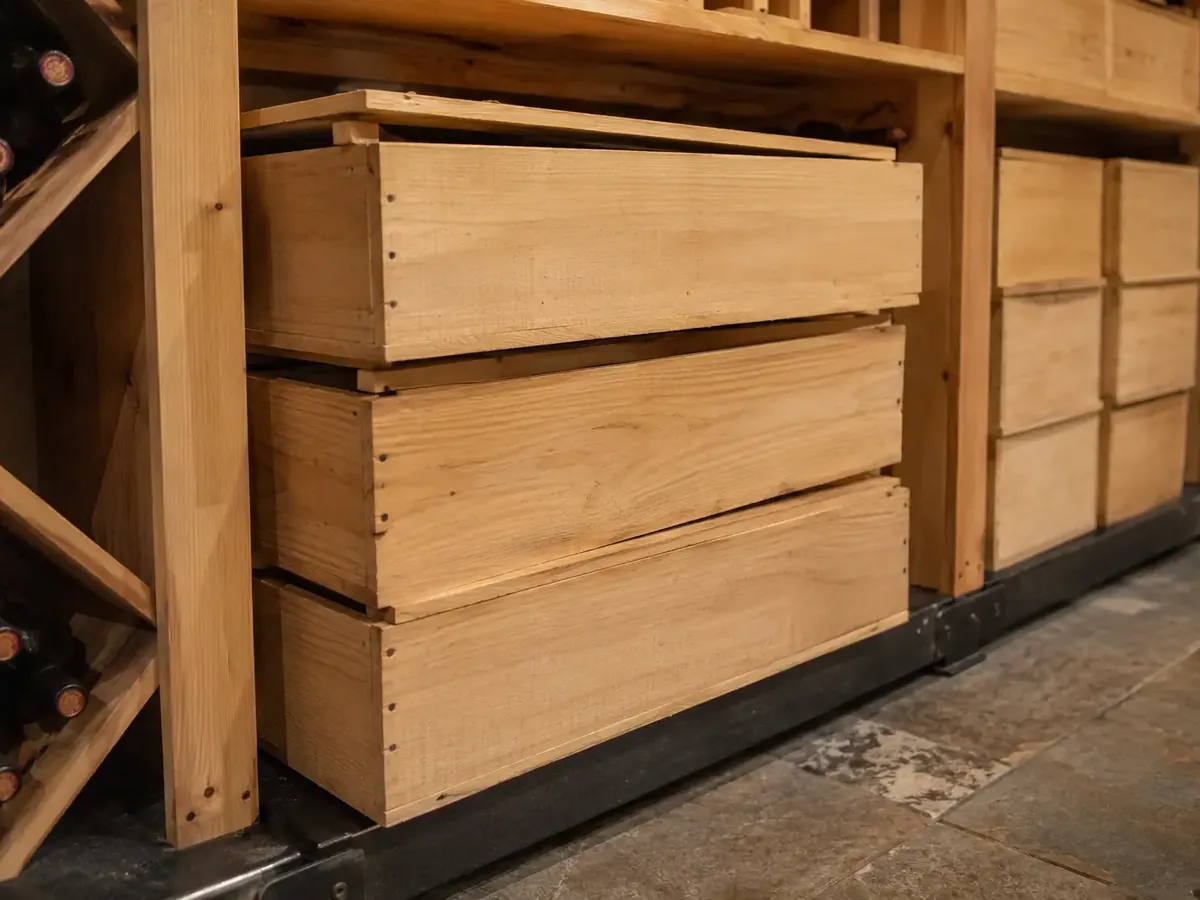
- Case storage sized so cases stay sealed and stacked, not unpacked
- Floor loading checked before capacity is finalised
Bottle diameter varies more than people expect. Standard Bordeaux bottles sit happily in a 3 inch bore, Burgundy bottles need more, and many Champagne and large-format bottles need considerably more again. Racking cut for a single bore either refuses the wider bottles or leaves the narrow ones rattling, so we set the bore mix from a sample of what you own.
The usual approach
A single racking type run wall to wall, with magnums stacked on the floor because nothing in the room will take them and cases broken open because there is nowhere to put them.
How we do it
A mixed layout with dedicated large-format positions and real case storage, laid out from a sample of the collection you actually have.
Racking specification
- Bottle weight
- ~3.0 lbs each, full
- Standard bore
- Sized per bottle type
- Case storage
- Designed in, not improvised
- Orientation
- Horizontal, cork wetted
What actually matters in racking
Racking has to hold bottles horizontally so the cork stays wet, hold them securely enough that a basement door slamming does not shift anything, and let you find a specific bottle without unstacking half a wall.
- A thousand bottle wall introduces roughly 3,000 pounds of static dead load before any cabinetry or stone cladding is counted, which is why floor capacity gets checked before the layout is finalised.
- Diamond bins store the most bottles per square foot and make individual retrieval the hardest, so they suit case-quantity wines rather than singles.
- Bottles stored at a slight downward angle keep the cork wetted more reliably than dead level, particularly in racking that will sit partially empty.
- Anything stored above shoulder height needs to be wine you are willing to fetch a ladder for, which in practice means backup stock rather than everyday drinking.
Racking cost varies more than any other element in a cellar. Metal peg systems and simple pine racking sit at one end, all-heart redwood and stained hardwood millwork at the other, with a factor of several between them for the same bottle count.
The cost-efficient move in most cellars is mixing: hardwood display racking where it is seen, and plainer high-density storage where it is not. That gets the look at the front and the capacity at the back.
Before we design your racking
Racking design is the one part of a cellar where a sample of your actual collection is worth more than any amount of discussion.
- Pull out one bottle of each shape you own, including any magnums, half bottles, dessert wine bottles and anything with an unusual profile. We measure them rather than assuming.
- Count how much of your buying is by the case versus by the bottle. That ratio sets how much of the wall becomes case storage, and it is the number most often guessed wrong.
- Identify the twenty or so bottles you want to see rather than store. Those get display positions, and knowing the count keeps the display from eating the storage.
- Tell us your height comfortably reachable without a ladder. Racking above that becomes long-term storage by default and should be planned as such.
Layout and inventory are closely linked.
If organisation matters as much as capacity, our cost guide covers where racking spend actually pays off.
How your wine cellar racking & storage systems project works
Measure the collection
We measure sample bottles from your actual collection and establish your case-to-bottle buying ratio before drawing any racking.
Check the structure
Floor construction and span are checked against the intended load, and reinforcement is identified before capacity is fixed.
Draw and approve
Rack elevations are produced showing every bore, bin and case position, and you approve them before anything is cut.
Install and load-test
Racking is installed and secured to structure, then we load-check the first bay before the full collection goes in.
Wine Cellar Racking & Storage Systems questions we get asked
Should bottles be stored label up or label down?
Label up is more practical and does no harm. The important thing is that the bottle is horizontal or slightly nose-down so the wine stays in contact with the cork.
Some collectors prefer label down on the theory that sediment settles away from the label. In a stable cellar the difference is negligible.
How much wall do I need for 1,000 bottles?
Roughly 90 to 110 square feet of rack face for individual bottle storage, or considerably less if a meaningful proportion is diamond bins or case storage.
In practice a 10 by 12 foot room with racking on three walls comfortably exceeds 1,000 bottles with room for a tasting surface.
Do I need to be present while you install my racking?
Not for the installation, but we do ask you to be there for the elevation approval beforehand, because that is the last point where layout changes are cheap.
Racking installation itself is typically two to four days depending on the size of the room.
Do you offer free quotes for racking and storage systems?
Yes. Racking quotes are itemised by type so you can see what individual bottle columns cost against bins against case storage, and adjust the mix if you want to.
Call 734-415-4984 and bring a few sample bottles to the survey.
Can racking be added to an existing cellar?
Usually yes, provided the floor can carry the additional load and the new racking can be secured to real structure rather than just drywall.
The awkward case is matching existing timber that has aged. Redwood and cedar both darken over time and a new section will read lighter for a year or two.
What about storing wine in original wooden cases?
It is a genuinely good option for long-term holdings, particularly for wine you may resell, since original packaging matters to buyers.
Cases need a solid, level base and enough clearance to slide out. We build case bays with a hardwood deck rather than resting them on a rack rail.
What goes wrong, and what we do instead
The most common racking regret is uniformity, and the second is guessing the bottle mix.
| The mistake | What it causes | What we do instead |
|---|---|---|
| One racking type run wall to wall | A fraction of the capacity the same wall could hold | A mix of individual, bin, display and case storage set by how you buy |
| Single bore size throughout | Champagne and large formats that will not fit, standard bottles that rattle | Bore mix set from measured samples of your actual collection |
| Case storage left out | Cases broken open because there is nowhere to put them | Dedicated case bays with a hardwood deck |
Racking built around how you buy
Bring a few sample bottles to the survey and we will design the mix around your actual collection.