
Specialty and materials
Stone & Brick Wine Cellar Construction in Ann Arbor, MI | Fieldstone, Brick and Lime Mortar
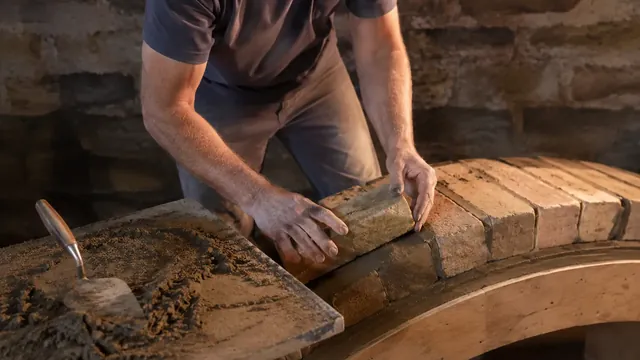
Masonry gives a cellar something no framed room can: real thermal mass. Ann Arbor Wine Cellars builds in Michigan fieldstone and brick, including barrel-vault ceilings, and repoints existing historic foundations using lime mortar rather than modern portland mixes. That distinction matters enormously in Ann Arbor and Ypsilanti, where 19th century fieldstone and soft brick foundations were built with lime mortar and will spall and crumble if repointed with a mortar harder than the stone itself.
Stone and Brick Wine Cellar Construction Ann Arbor MI
Masonry work in a cellar splits into two very different jobs: building new stone and brick, and dealing correctly with the historic masonry that is already there.
- Lime mortar specified for repointing historic fieldstone and soft brick
- New masonry tied and supported rather than free standing against framing
- Barrel-vault ceilings built on formers, with the structure above checked first
- Masonry left breathable rather than sealed with impermeable coatings
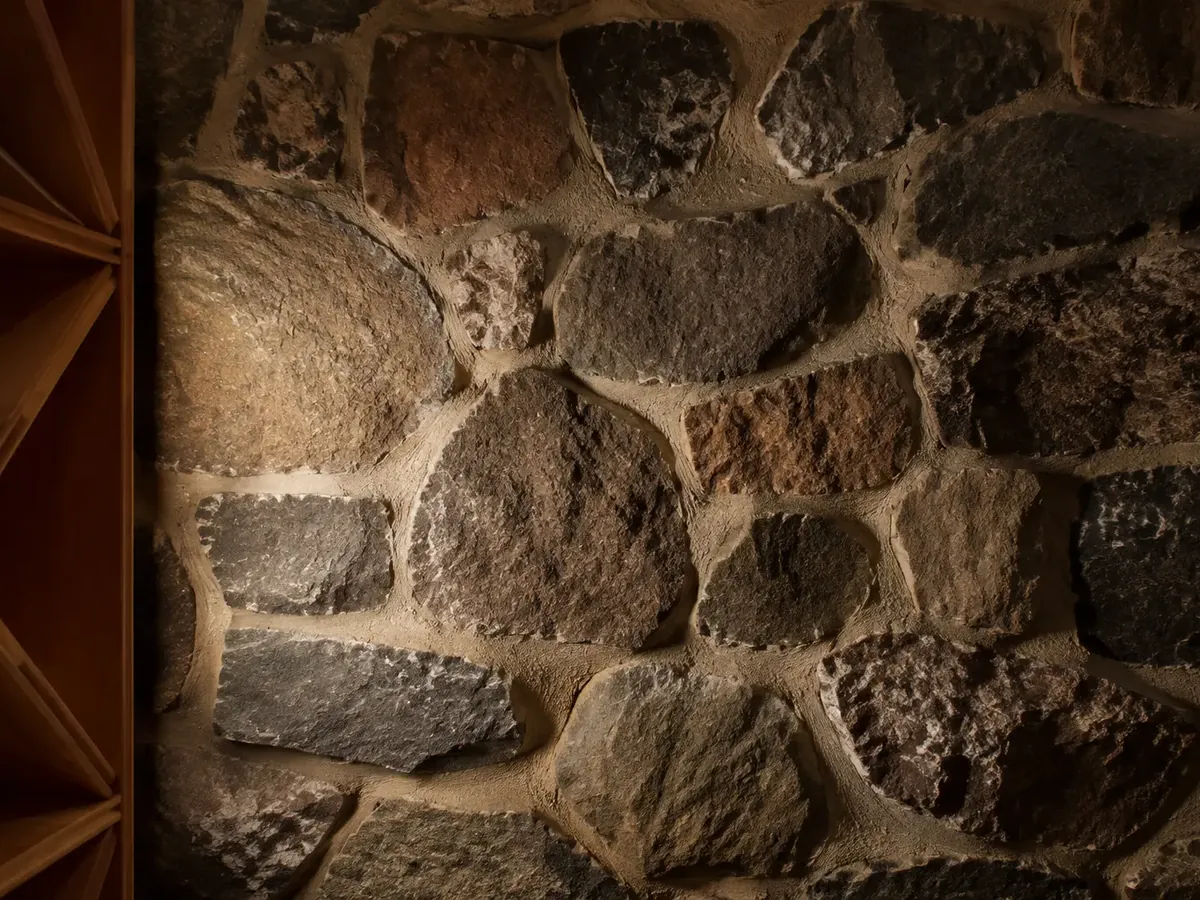
The rule with historic masonry is that the mortar must always be softer than the units it joins. Lime mortar is sacrificial by design: it takes up movement and weathers away over decades, and it can be replaced. A hard portland mortar refuses to move, so the stress goes into the stone or brick instead, and the face of the unit spalls off. That damage is not reversible.
The usual approach
A 19th century fieldstone foundation repointed with a hard modern mortar, spalling the faces off the stones over the following decade.
How we do it
The same wall repointed in a lime mortar matched to the original, taking up movement and protecting the stone the way the wall was designed to work.
Masonry specification
- Historic repointing
- Lime mortar, matched
- New work
- Fieldstone or brick
- Vaulting
- Built on formers, structure checked
- Finish
- Breathable, not sealed
What actually matters in masonry cellar work
Masonry is the longest-lasting thing in a cellar and the least forgiving of the wrong material choice, because mistakes take a decade to show and cannot be undone.
- Mortar must always be softer than the masonry it joins, which is why lime is correct for historic fieldstone and soft brick and portland is not.
- Masonry buffers temperature, so a stone-walled cellar swings less between cooling cycles than a framed one of the same size.
- Sealing historic masonry with an impermeable coating traps moisture inside the wall, which then leaves through the face of the stone and spalls it.
- A brick barrel vault imposes outward thrust at its springing points, so what it bears onto has to be checked before it is built rather than after.
Masonry is labour intensive and priced accordingly. Repointing an existing fieldstone wall is charged by area and by joint condition, and vaulted brickwork is among the most skilled and slowest work in any cellar.
Stone cladding onto a framed wall is a middle option that gives much of the look without the structural implications of solid masonry, though it delivers less thermal mass in return.
Before masonry work begins
Masonry is heavy, dusty and slow, and it interacts with the existing structure more than any other cellar trade.
- Have the existing mortar assessed rather than assumed. A simple scratch test tells us whether we are dealing with lime or a previous hard repointing, and that changes the approach entirely.
- Check the floor loading before specifying stone cladding. Stone adds substantial dead load on top of the racking load, and the two are cumulative.
- Plan a materials route and a staging area. Stone and brick arrive on pallets and cannot be carried down a finished staircase in bulk without protecting it thoroughly.
- Expect dust and plan for it. Masonry cutting produces fine silica dust that travels through a house, so we seal the work area and run extraction, but adjacent rooms should still be cleared.
Historic masonry work can trigger review in some districts.
Our permits and codes guide covers where historic district requirements apply in Ann Arbor and Ypsilanti.
How your stone & brick wine cellar construction project works
Assess existing masonry
We test the existing mortar and the condition of the stone or brick before specifying anything, because the wrong mortar causes permanent damage.
Structural check
Where new masonry or a vault is planned, we confirm what it will bear onto and what thrust it will impose.
Build or repoint
Fieldstone and brickwork are laid, or historic joints are raked out and repointed in a matched lime mortar.
Cure and finish
Masonry is allowed to cure properly and finished breathable, so moisture continues to leave through the joints rather than the stone faces.
Stone & Brick Wine Cellar Construction questions we get asked
Can I leave my basement fieldstone exposed in the cellar?
Yes, and it is one of the most attractive things about older Ann Arbor and Ypsilanti houses. It needs repointing where the joints have failed, and it needs to stay breathable rather than sealed.
The caveat is thermal. Exposed fieldstone gives you mass and character but no insulation, so the insulated envelope has to sit somewhere else or the room accepts a higher cooling load.
Why can't I just use regular mortar?
Because modern portland mortar is harder than 19th century fieldstone and soft brick. When the wall moves, and all walls move, the stress goes into the softer material, and the faces of the stones spall off.
Lime mortar is designed to be the sacrificial element. It takes the movement and can be replaced when it eventually weathers, which is the whole point.
Do I need to be present while you carry out masonry work?
No, though masonry is the dustiest phase of any cellar build and you may prefer to be elsewhere during cutting.
We seal the work area and run dust extraction, but a house is never entirely unaffected by masonry work.
Do you offer free quotes for stone and brick cellar construction?
Yes. For historic repointing we will assess the existing mortar during the visit, since the condition of the joints is the main variable in the price.
Call 734-415-4984 to arrange it.
Does stone make the cellar colder?
Not colder, but more stable. Masonry stores thermal energy, so the room takes longer to warm up and longer to cool down, which smooths out the cycling between cooling runs.
That thermal mass is also why a stone cellar rides out a power outage better than a framed one.
Can you build a real barrel vault or is it a formed ceiling?
We build genuine brick barrel vaults on formers where the structure above will take the thrust, and we also build formed and clad vaults where it will not.
The difference is real and we will always tell you which you are getting. A true vault is considerably more expensive and considerably more impressive.
What goes wrong, and what we do instead
Masonry is the longest-lasting element in a cellar and the least forgiving of the wrong material.
| The mistake | What it causes | What we do instead |
|---|---|---|
| Historic masonry repointed in portland mortar | Stress forced into the stone, spalling faces over a decade | Lime mortar matched to the original, always softer than the masonry |
| Impermeable sealer applied to old stone | Moisture trapped in the wall, then leaving through the stone face | Breathable finishes that let the wall dry through the joints |
| Vault built without checking what it bears on | Outward thrust imposed on structure never designed for it | Structural check at the springing points before any vault is built |
Masonry done the way the wall was built
We will test the existing mortar before quoting, because the wrong mix causes damage you cannot undo.