Serving Dixboro, MI
Dixboro MI Wine Cellars | Historic Homes and Estate Lots
Dixboro is a hamlet rather than a town, sitting in the northwest corner of Superior Township and never incorporated in its own right. Ann Arbor Wine Cellars works here on two kinds of property: genuinely old houses, some dating to the settlement's founding period, and the larger estate homes on acre-plus lots that have been built around them. The community was settled as early as 1825 by John Dix, a sea captain from Boston, and platted in 1826, which makes some of the housing here among the oldest we work in anywhere in the county.
Dixboro MI Wine Cellars
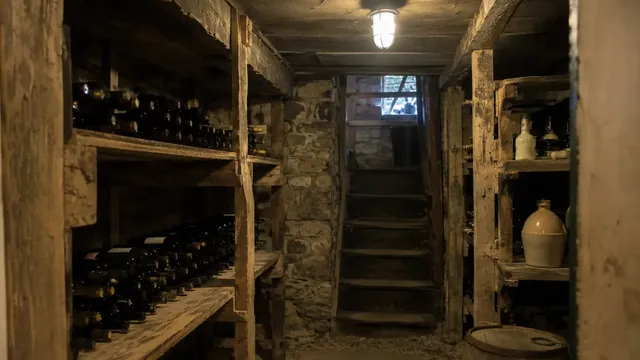
The oldest structures in Dixboro predate almost everything else in our service area, and they need to be approached as historic fabric rather than as buildings with basements.
- Pre-1850 structures need survey before any load is added to a foundation
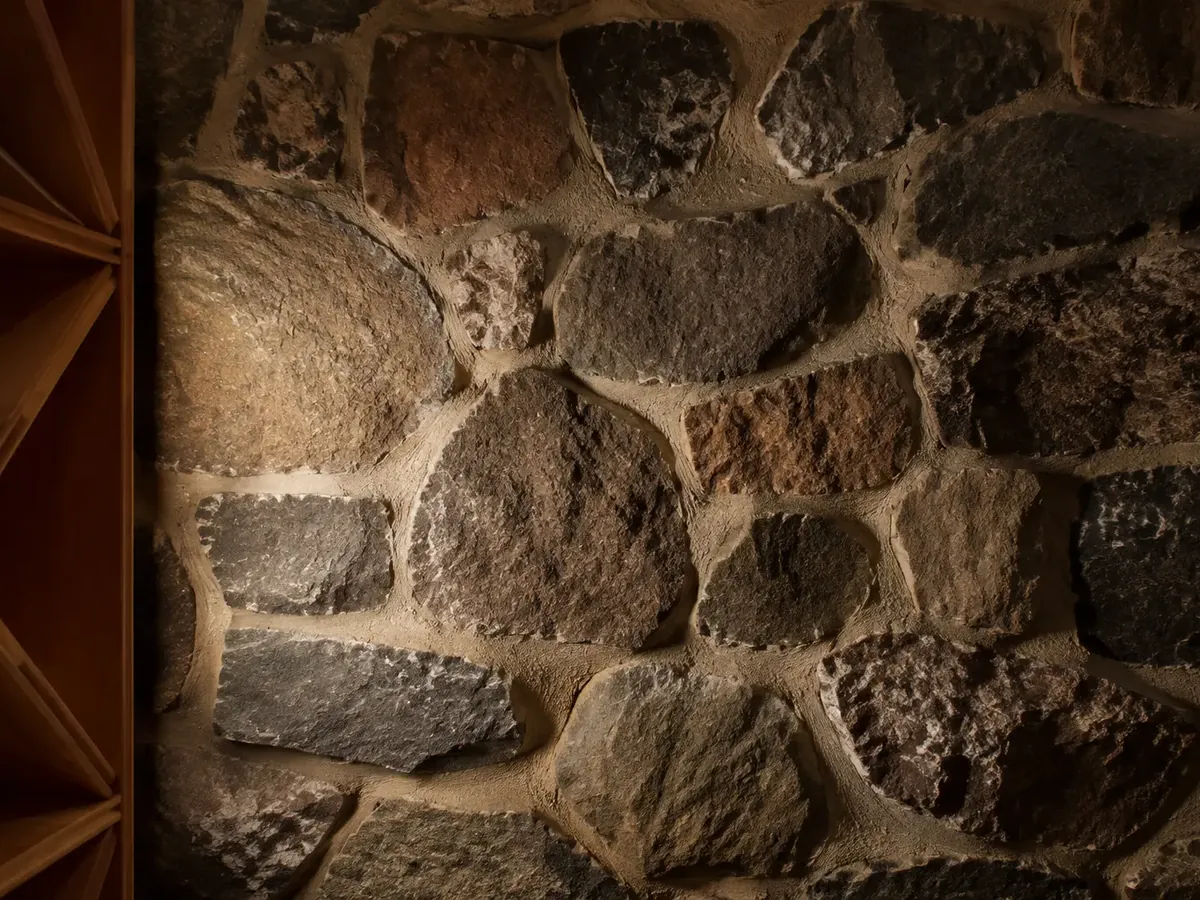
- Original stone foundations require lime mortar rather than modern mixes
- Low clearance in the oldest houses constrains both racking and cooling
- Larger estate lots nearby offer far more conventional conditions
Dixboro grew faster than nearby Ann Arbor in its earliest years before the railroads bypassed it, and the housing from that period is genuinely early. In the oldest properties we survey the foundation before proposing any capacity at all, because a stone foundation laid in the 1830s was not built with a loaded rack wall in mind.
Dixboro conditions
- Oldest stock
- 1830s onward, stone foundations
- Newer stock
- Estate homes on acre-plus lots
- Mortar
- Lime, on historic work
- Governance
- Superior Township
What sets Dixboro apart for cellar work
The hamlet was platted in 1826 for John Dix by the surveyor A. B. Rowe, and it was growing faster than Ann Arbor until the railroads chose the larger settlement instead. The oldest surviving structure is the general store, built in 1840.
- Foundations from the 1830s and 1840s were not built to carry concentrated modern loads, so a structural survey precedes any capacity figure on the oldest Dixboro properties.
- Original stone foundations here need lime mortar for any repointing, since a harder modern mix would damage the stone rather than protect it.
- Basement clearance in the earliest housing is frequently very low, which constrains racking design and generally rules out ducted cooling.
- The larger estate homes built on the acre-plus lots around the historic core present entirely conventional conditions and need none of this caution.
Work on the oldest Dixboro properties carries a survey and preparation cost that newer housing does not, and we would rather establish that at the start than discover it during construction.
Estate properties on the surrounding lots price much like any other modern custom home in the county, with poured concrete basements and no special preparation needed.
How our work applies in Dixboro
The age of Dixboro's oldest structures changes how carefully each of these services has to be carried out.
| Service | What it involves in Dixboro |
|---|---|
| Wine Cellar Consultation & Planning | A free assessment, which matters most on the oldest Dixboro properties. |
| Stone & Brick Wine Cellar Construction | Lime mortar repointing and masonry work on early stone foundations. |
| Wine Cellar Conversions | Converting existing basement rooms where the structure permits it. |
| Custom Wine Cellars | Full custom cellars in the estate homes on the surrounding acreage. |
| Wine Cellar Insulation & Vapor Barrier Installation | Stud-off framing and vapour control against historic stone. |
| Wine Cellar Racking & Storage Systems | Low-clearance racking designed for the oldest houses in the hamlet. |
How a Dixboro cellar project runs
Survey the structure
On pre-1850 Dixboro properties we survey the foundation before proposing any bottle capacity at all.
Establish the limits
Clearance, foundation condition and load capacity are all confirmed, and they set what the cellar can be.
Treat the masonry
Any repointing is done in lime mortar and framing is held clear of the historic structure throughout.
Build within the limits
Racking is designed to the actual clearance and the Dixboro cellar is conditioned and logged before loading.
Wine cellar questions from Dixboro
Can you build a cellar in a house this old?
Usually yes, but we survey the foundation first rather than assuming. A stone foundation from the 1830s was not designed for a concentrated modern load, and finding its limits matters before capacity is discussed.
Where the structure is limited, the answer is a smaller cellar rather than no cellar.
Will you damage the historic fabric?
Not if the work is done properly. Framing is held clear of the original stone, nothing is anchored into historic masonry, and any repointing uses lime mortar matched to the original.
That approach costs more than the alternative and it is the only one we will use on structures this age.
Are the estate homes around Dixboro different?
Completely. The larger houses on the surrounding acre-plus lots have modern poured concrete basements and present entirely conventional conditions.
Those price and build like any other modern custom home in the county.
Do I need to be present while you build my Dixboro cellar?
No, beyond the survey and elevation approval. On the oldest properties we photograph what we find during the survey so you can see the structure for yourself.
The build itself does not require you there.
Do you offer free quotes for wine cellars in Dixboro?
Yes, including the site visit. On historic properties the survey element takes longer, and we will flag honestly if a structural engineer's input is needed.
Call 734-415-4984 to arrange it.
Who handles permits for Dixboro?
Superior Township, since Dixboro is unincorporated and has always been governed as part of the township.
We handle the mechanical permit application as part of the project.
Will a cellar affect the character of a historic Dixboro house?
It should not, and on the oldest properties we treat that as a design requirement rather than a preference. Everything we add is independent of the historic fabric and reversible in principle.
The stone and timber that make these houses worth living in usually make excellent cellar walls too, left exposed and repointed rather than covered over.
Practical notes for Dixboro projects
Work on genuinely old Dixboro properties follows a few firm rules.
- On pre-1850 properties we survey the foundation before proposing any bottle capacity, because a stone foundation from the 1830s has real limits.
- Nothing gets anchored into historic masonry, and framing is held clear of it, so the work stays reversible in principle.
- The larger estate homes on the surrounding acre-plus lots have modern poured concrete basements and need none of that caution.
Careful work on genuinely old houses
We will survey the foundation before discussing capacity, because Dixboro structures deserve that.