Specialty and materials
Metal & Modern Wine Racking Systems in Ann Arbor, MI | Label-Forward Anodised Aluminium
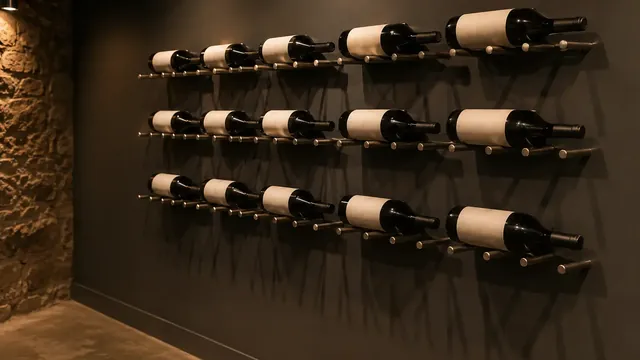
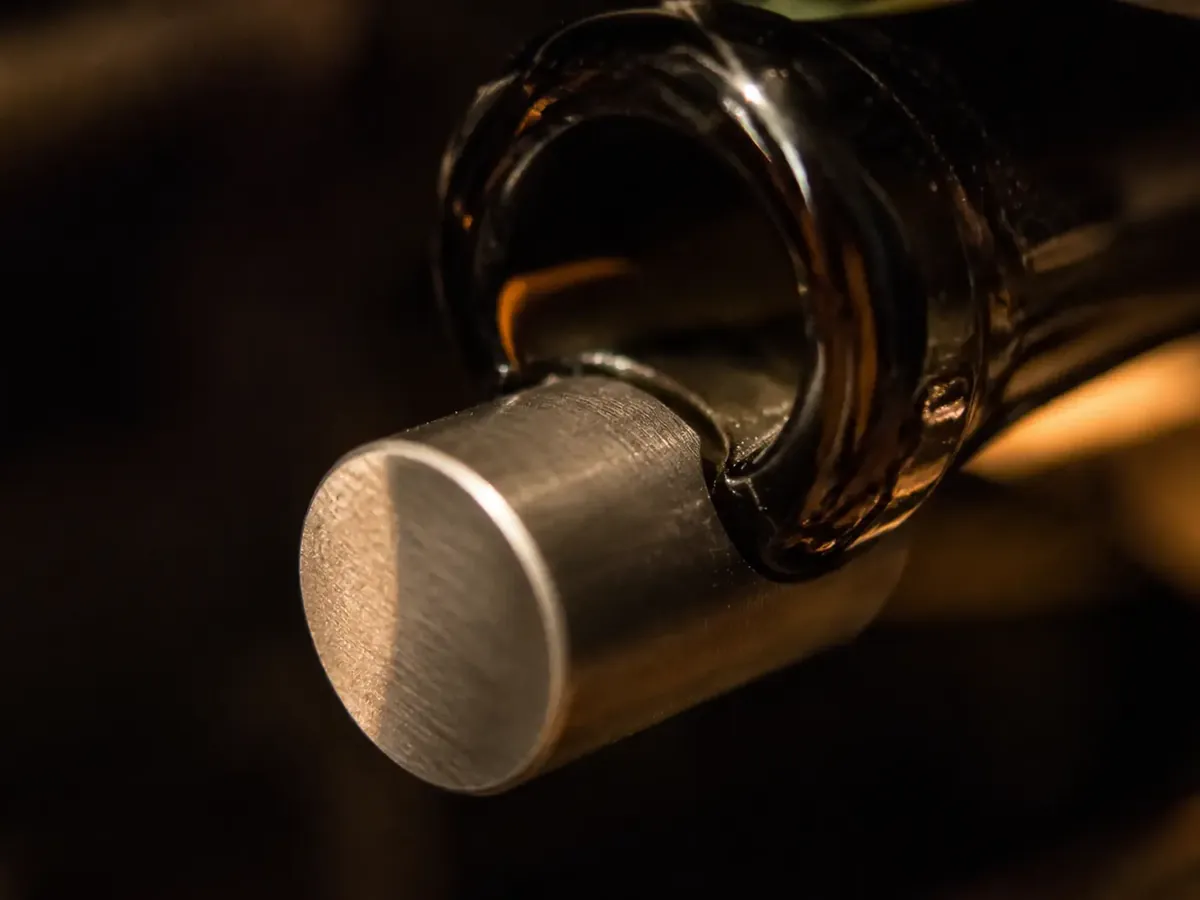
Metal racking solves a problem timber cannot: showing the label rather than the punt. Ann Arbor Wine Cellars installs anodised aluminium peg systems that hold each bottle by the neck and the base, presenting it label-forward and horizontal so the cork stays wet. Because the hardware is small and the bottles appear to float, a metal system reads as almost no visual mass at all, which is why it suits rooms where the wall finish is meant to be seen. The trade-off is honest: label forward storage uses more wall per bottle than a timber bin does.
Metal Wine Racking Systems Ann Arbor MI
The practical argument for metal racking is inventory. If you can read every label from the doorway, you stop handling bottles to find out what they are, and handling is what disturbs sediment.
- Anodised aluminium, which is dimensionally and chemically stable at cellar humidity
- Bottles held horizontal so the cork remains wetted
- Fixings into real structure, with backing plates added where needed
- Peg spacing set from your actual bottle diameters
Metal systems concentrate their load into a small number of fixing points, which is the opposite of a timber rack that distributes weight along a base plate. On a stud wall that means steel backing plates installed before the wall finish goes on. Fixing a loaded metal system into drywall with anchors is the single most common failure we get called to.
The usual approach
A peg system anchored into drywall with plastic plugs, sagging within a year and pulling out of the wall with a full row of bottles on it.
How we do it
The same system fixed through the finish into steel backing plates installed at framing stage, carrying full load indefinitely.
Metal racking specification
- Material
- Anodised aluminium
- Orientation
- Horizontal, label forward
- Fixing
- Into structure or steel backing
- Suits
- Modern and display-led rooms
What actually matters in metal racking
Metal racking looks simple and is entirely dependent on things that happen before it arrives, principally what is behind the wall.
- Peg systems transfer the full weight of every bottle into a few small anchors, so the substrate behind the finish matters far more than with timber racking.
- Anodised aluminium is stable in a 60 percent humidity environment, whereas untreated steel and some plated finishes will corrode at the fixing points over several years.
- Bottle diameter varies enough between Bordeaux, Burgundy and Champagne formats that peg spacing has to be set from your actual bottles rather than a nominal figure.
- Metal and glass surfaces reflect sound, so a cellar racked entirely in metal is noticeably louder to stand in than a timber-racked room of the same size.
Metal racking is generally priced per bottle position rather than per linear foot, which makes it easy to compare directly against timber. Per bottle it typically sits above simple timber racking and below stained hardwood millwork.
The hidden cost is preparation. Adding steel backing plates during framing is inexpensive. Retrofitting proper fixing into a finished wall means opening it up, and that changes the economics considerably.
Before we install metal racking
Almost all the preparation for a metal system happens in the wall, which means it has to be decided before the wall is closed.
- Confirm the racking layout before drywall goes on, so steel backing plates land exactly where the fixings will be rather than approximately.
- Bring us a bottle of each format you own so peg spacing is set from measured diameters. Champagne and large-format bottles in particular need wider spacing than standard.
- Decide how high the top row goes. Metal systems make high storage look effortless and it is still a ladder job, so the practical limit is the same as any other racking.
- Consider one soft surface in the room. A fully metal and concrete cellar is acoustically hard, and a single upholstered or fabric element makes a noticeable difference.
Display-led storage changes how much wall you need.
Our cost guide covers capacity trade-offs between display racking and higher density storage.
How your metal & modern wine racking systems project works
Measure your bottles
Peg spacing is set from the actual diameters in your collection rather than a nominal standard, so every format sits correctly.
Install backing
Steel backing plates are fixed to framing at the exact fixing positions before wall finishes are applied.
Set out and fix
The metal racking is set out to a laser line and fixed through the finish into the prepared backing.
Load and check
We load the first full row and check deflection before the rest of the collection goes onto the system.
Metal & Modern Wine Racking Systems questions we get asked
Does metal racking hold bottles as securely as wood?
Yes, when it is fixed into real structure. Each bottle is supported at two points and cannot roll, and a properly installed peg system is extremely stable.
What it is not tolerant of is poor fixing. A timber rack anchored badly sags. A metal system anchored badly comes off the wall.
Can metal racking hold magnums and large formats?
Yes, with wider peg spacing and often a deeper peg. It has to be designed in rather than added, since peg positions are fixed once installed.
Tell us how many large-format bottles you own and we will allocate dedicated positions for them.
Do I need to be present while you install metal racking?
Not during installation, but the backing plate stage happens much earlier in the build and it is worth confirming the layout with us at that point.
Once the plates are in, the racking position is effectively fixed.
Do you offer free quotes for metal wine racking systems?
Yes, and metal systems are straightforward to quote because pricing is per bottle position. We will give you a cost per bottle you can compare directly against timber.
Call 734-415-4984 to discuss your layout.
Will the metal corrode at 60 percent humidity?
Anodised aluminium will not. The anodising layer is an integral oxide rather than a coating, so it does not chip or lift and it resists corrosion indefinitely at cellar humidity.
Untreated steel, plated steel and some cheaper finishes will show corrosion at the fixings within a few years, which is why we specify anodised aluminium or 316 stainless.
Can metal and wood racking be combined?
Yes, and it is often the best answer. Metal display racking on the wall you see from the door, timber bins and case storage on the walls you do not.
That gets the label-forward display where it counts and keeps the density where it is needed.
Does metal racking work in a humid cellar?
Anodised aluminium and 316 stainless both do, indefinitely. The anodised layer is an integral oxide rather than a surface coating, so it does not chip or lift the way plating does.
What fails at 60 percent humidity is plated steel and cheaper mild steel hardware, usually starting at the fixings where the finish was pierced during installation.
What goes wrong, and what we do instead
Metal racking looks simple and depends entirely on what is behind the wall.
| The mistake | What it causes | What we do instead |
|---|---|---|
| Fixed into drywall with plastic anchors | A loaded row pulling out of the wall rather than sagging gracefully | Steel backing plates installed at framing, before finishes go on |
| Plated or mild steel hardware | Corrosion at the fixings within a few years at 60 percent humidity | Anodised aluminium or 316 stainless throughout |
| Peg spacing set to a nominal bottle | Champagne and large formats that will not seat properly | Spacing set from measured diameters in your own collection |
Racking you can read from the doorway
Bring your bottle formats and we will set the system out to your actual collection.