Serving Chelsea, MI
Chelsea MI Wine Cellars | Historic Masonry and Country Homes
Chelsea has more surviving 19th century masonry than almost any comparable town in the county, and that shapes the cellar work here. Ann Arbor Wine Cellars builds throughout Chelsea and the surrounding townships, from downtown properties within the Chelsea Commercial Historic District, which contains 61 contributing structures along and near Main Street, out to the rural acreage west of town. The brick that defines downtown Chelsea went up after a series of fires in the 1870s destroyed the earlier wooden buildings, and that brick is what we are usually working against.
Chelsea MI Wine Cellars
Downtown Chelsea masonry is soft, historic and mortared with lime, and it is the single most important technical fact about building a cellar in the older parts of town.
- Soft historic brick requires lime mortar repointing, never a hard portland mix
- Downtown properties may sit within the commercial historic district
- Rural acreage west of town opens up outbuilding and tasting room conversions
- Older Chelsea basements frequently need a panel upgrade for a dedicated circuit
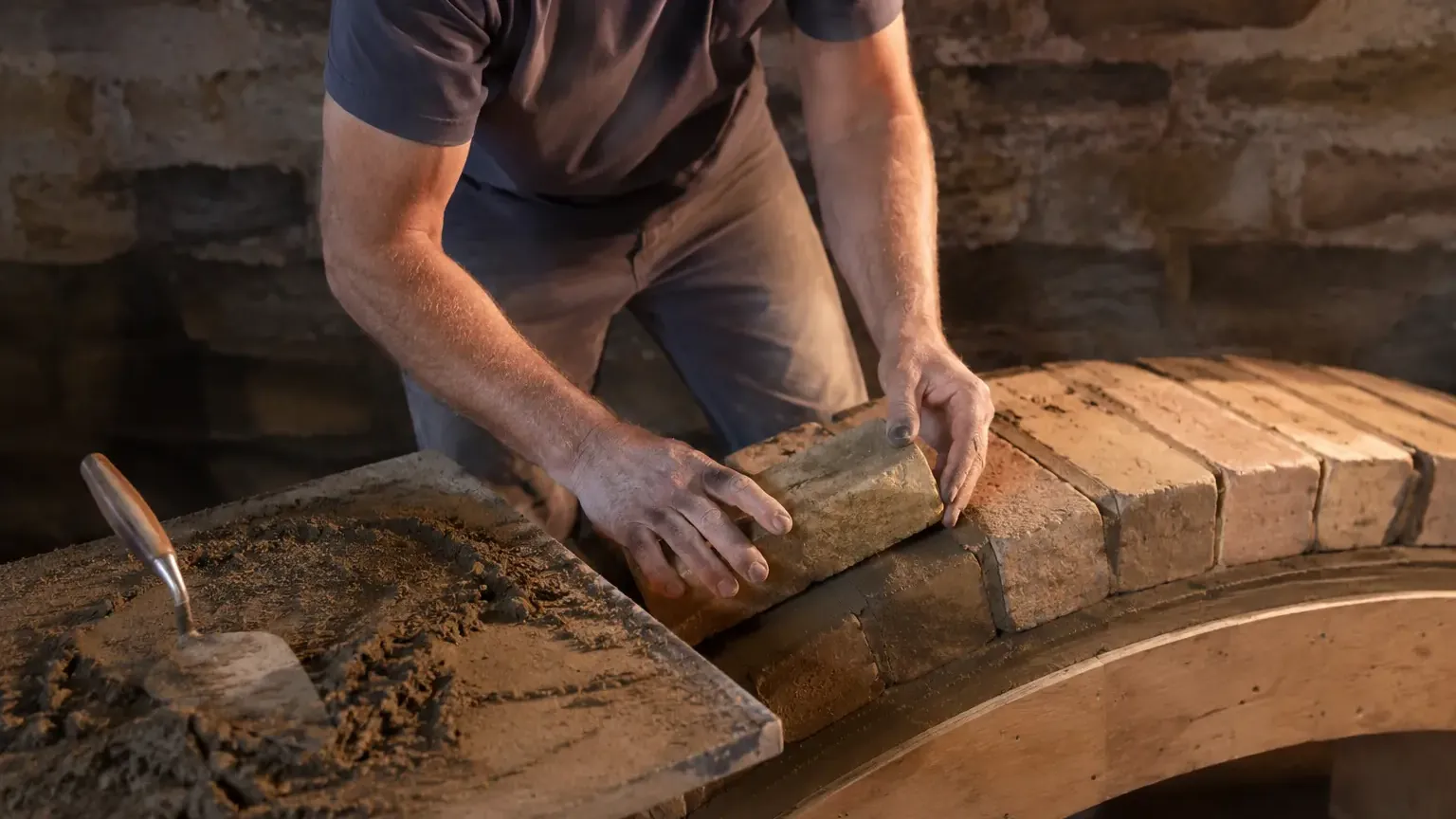
The reason we insist on lime mortar in Chelsea is that the brick here is softer than modern masonry. Repointing 1870s brickwork with a hard portland mortar forces all subsequent movement into the brick rather than the joint, and the faces spall off over a decade or two. That damage cannot be reversed, which is why we test the existing mortar before quoting any masonry work downtown.
Chelsea conditions
- Downtown masonry
- Soft brick, lime mortar
- Rural stock
- Acreage, barns, farmhouses
- Historic district
- Chelsea Commercial, Main Street
- Common upgrade
- Panel capacity for a dedicated circuit
What sets Chelsea apart for cellar work
Chelsea grew as a railroad and manufacturing town, and Frank Glazier's stove works dominated it from 1891 until the company collapsed in 1907. The industrial and commercial buildings from that period still define the town, and the residential stock around them is of a similar vintage.
- Soft 19th century brick in Chelsea will spall if repointed with modern portland mortar, so lime is the correct and only specification for historic joints.
- Properties within the Chelsea Commercial Historic District may face review for exterior alterations, which affects condenser placement rather than the cellar itself.
- Rural acreage west and north of Chelsea frequently includes timber outbuildings well suited to tasting room conversion, with the floor loading already adequate.
- Older Chelsea housing commonly has an original electrical panel with no spare capacity, which means a subpanel is often part of the cellar scope here.
Chelsea quotes in the older parts of town frequently include masonry assessment and electrical upgrade lines that newer housing elsewhere in the county does not need. Neither is optional where they apply.
Rural Chelsea properties are a different picture entirely, where the cost variable is usually the scale of the outbuilding being converted rather than any preparatory work on the structure.
How our work applies in Chelsea
Chelsea's soft 1870s brick and its rural acreage pull our services in two different directions, and both are common here.
| Service | What it involves in Chelsea |
|---|---|
| Stone & Brick Wine Cellar Construction | Lime mortar repointing and masonry work on Chelsea's historic brick and stone. |
| Wine Tasting Rooms | Tasting room conversions in the timber outbuildings common on Chelsea acreage. |
| Wine Cellar Conversions | Turning basement storage rooms in Chelsea homes into sealed, cooled cellars. |
| Wine Cellar Renovation & Remodeling | Diagnosing and rebuilding cellars in older Chelsea properties that never held temperature. |
| Wine Cellar Humidity Control Systems | Holding 60 percent humidity in basements that run damp through a Michigan spring. |
| Wine Cellar Consultation & Planning | A free assessment of what your Chelsea property can realistically support. |
How a Chelsea cellar project runs
Test the mortar
On any Chelsea property with historic masonry we test the existing mortar before quoting, because the wrong mix causes permanent damage.
Check the panel
Electrical capacity is confirmed early, since older Chelsea housing frequently needs a subpanel before a dedicated cellar circuit can be run.
Prepare and seal
Masonry is repointed where needed and the insulated envelope is built clear of the historic structure.
Install and commission
Cooling and racking go in and the Chelsea cellar is held at temperature and logged before loading.
Wine cellar questions from Chelsea
Why does mortar type matter so much in Chelsea?
Because the brick here is soft 1870s material and modern portland mortar is harder than it is. When the wall moves, the stress goes into whichever material is weaker, and with a hard mortar that is the brick face.
Lime mortar is designed to be sacrificial. It absorbs the movement and can be replaced when it weathers, which is exactly how these walls were meant to work.
Can I convert a barn on my Chelsea property?
Yes, and timber-framed outbuildings make excellent tasting rooms. The structure is usually more than adequate and the character is difficult to replicate.
The work involves building a fully insulated and conditioned envelope inside the existing building, plus running an adequate electrical supply out to it.
Will I need an electrical upgrade?
In older Chelsea housing, frequently yes. A cellar needs its own dedicated 120 volt 20 amp circuit with AFCI and GFCI protection, and many original panels here have no spare spaces.
We check this at the consultation and include it in the quote rather than raising it later.
Do I need to be present while you build my Chelsea cellar?
No, beyond the survey and elevation approval. Masonry work is the dustiest phase and you may prefer to be out during cutting, but it is not required.
We seal the work area and run extraction regardless.
Do you offer free quotes for wine cellars in Chelsea?
Yes. On historic properties we will assess the mortar and the panel during that visit, since both are common cost variables here.
Call 734-415-4984 to arrange a survey.
Does the historic district affect interior work?
Generally not. Interior alterations are usually outside the scope of district review, which focuses on what is visible from the public way.
Where it does bite is a condenser or line set penetration on a visible elevation, and we plan around that from the outset.
Practical notes for Chelsea projects
Working in and around Chelsea has a few recurring constraints. Knowing them early saves time on site.
- Downtown Chelsea has restricted loading times on and around Main Street, so masonry deliveries get scheduled outside them.
- Older houses here frequently have an original chimney flue running through the basement wall you want to insulate, and it needs identifying before foam is sprayed.
- Rural properties west of town often sit at the end of a long drive, so we confirm turning space for a delivery vehicle before ordering pallets.
Cellars that respect Chelsea's masonry
We test the mortar before quoting, because getting it wrong here causes damage you cannot undo.