
Core services
Wine Cellar Door Installation in Ann Arbor, MI | Closing the Biggest Gap in the Envelope
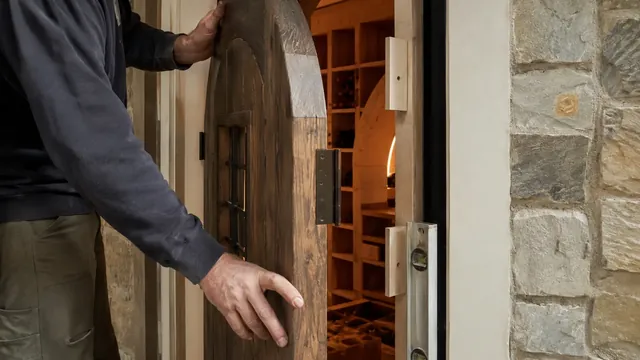
The door is the single largest hole in your thermal envelope and the component most often under-specified. Ann Arbor Wine Cellars installs cellar doors at 1 3/4 inch exterior grade solid wood core, thermally broken steel frames, or dual-pane insulated glass assemblies, all fitted with high-density magnetic gaskets, automatic drop-down bottom seals and commercial mortise locks. A standard interior hollow-core door is not a cheaper version of this. It is a different product that will leak conditioned air continuously and condense along its face.
Wine Cellar Door Installation Ann Arbor MI
Every time a cellar door is opened, conditioned air falls out of the bottom of the opening and warm humid air rolls in over the top. A sealed door keeps that to the seconds you are standing in it. An unsealed door does it continuously, all year.
- Solid core or insulated glass at 1 3/4 inch minimum thickness
- Magnetic gasket around the full perimeter, compressed when closed
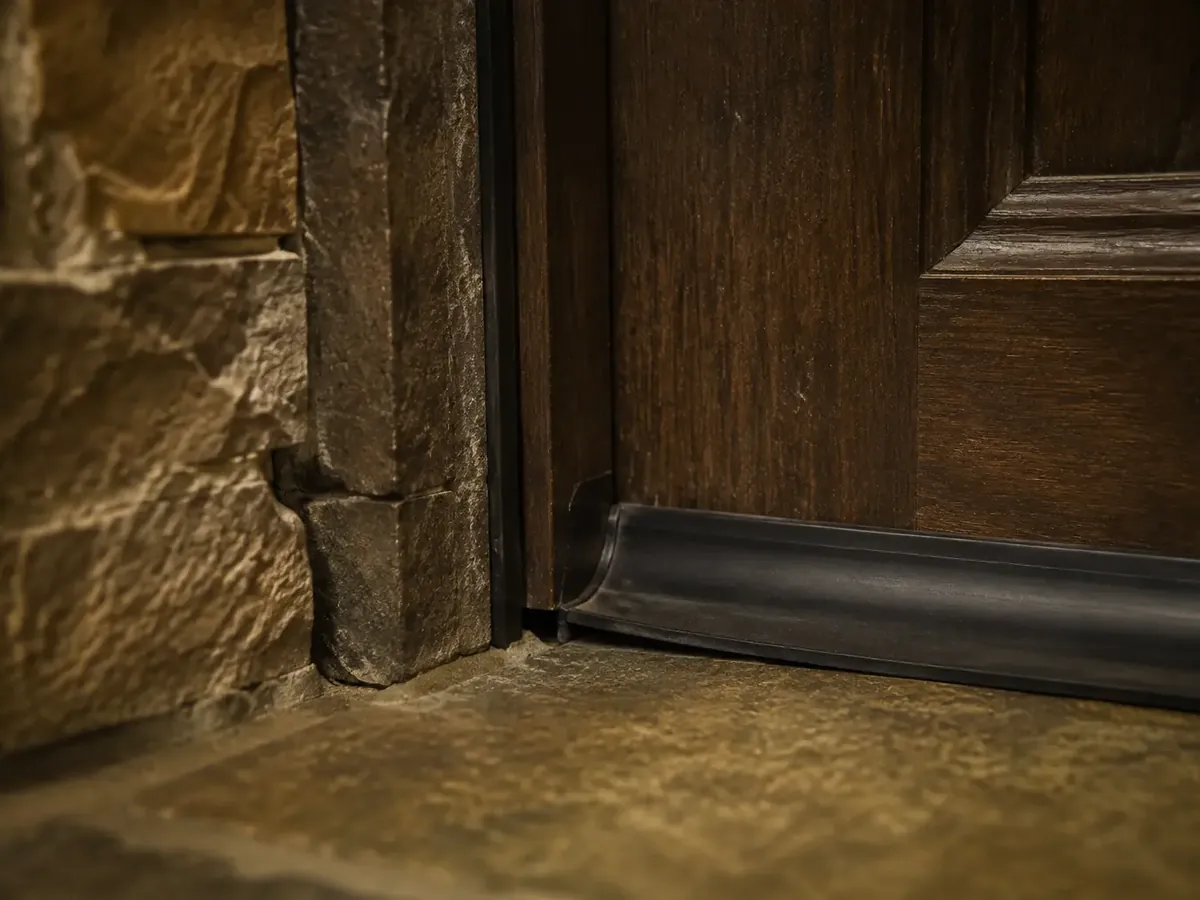
- Automatic drop-down seal at the threshold rather than a fixed sweep
- Frame thermally broken so it is not a cold bridge in its own right
The threshold is where most cellar doors leak. A fixed brush sweep drags on the floor, wears out, and never seals fully. An automatic drop seal is a mechanism inside the door bottom that lowers a gasket onto the threshold as the door closes and lifts it clear as the door opens, so it seals hard without dragging.
The usual approach
A hollow-core interior door hung on standard hinges with a brush sweep, leaking cold air at the threshold and sweating along its inside face by June.
How we do it
A 1 3/4 inch solid core in a thermally broken frame, with a magnetic gasket and an automatic drop seal that compresses onto the threshold every time it closes.
Door specification
- Thickness
- 1 3/4 in minimum
- Core
- Solid wood or insulated glass
- Perimeter seal
- High-density magnetic
- Lock
- Commercial mortise
What actually matters in a cellar door
A door has to seal, has to keep sealing after a few thousand cycles, and must not warp when one face of it lives at 55 degrees and the other at 70.
- A door with a 15 degree temperature difference across it will move if it is not built for that, which is why exterior grade construction is specified rather than interior grade.
- Magnetic gaskets seal more reliably than compression bulb seals over time, because they pull the door closed against the stop rather than depending on the latch alone.
- Frame material matters as much as the door. An untreated steel or aluminium frame conducts straight through the wall and condenses along its whole perimeter regardless of the door in it.
- Hinges have to carry considerably more weight than an interior door, and undersized hinges are the most common reason an initially good seal degrades within a year.
Door cost is driven by construction and by glazing. A solid wood core in a standard rectangular opening is the accessible end. An arched insulated glass unit in a thermally broken frame with a custom finish is several times that.
The hardware is a smaller line but not a trivial one, since magnetic gasket sets, automatic drop seals and commercial mortise locks all cost considerably more than domestic equivalents and are the parts doing the actual sealing.
Before we install your cellar door
Doors have long lead times and unforgiving tolerances, so the measurements and decisions want settling early.
- Confirm the swing direction against how the room will actually be used. A door swinging into the cellar eats rack wall, and one swinging out can block a corridor or foul a stair rail.
- Check the floor level across the threshold. Automatic drop seals have a limited travel, and an out-of-level basement floor can exceed it, which means levelling the threshold before installation.
- Decide on glass or solid early, because the two have different frames and different lead times, and switching between them mid-order usually means starting the order again.
- Measure the delivery path for the door and frame as a single assembly. Pre-hung units in thermally broken frames are heavy, rigid and cannot be flexed around a tight stairwell turn.
The door is one of the biggest single loads on your cooling.
See how door area and openings factor into the calculation in our cooling sizing guide.
How your wine cellar door installation project works
Measure and specify
We measure the opening including floor level across the threshold, and specify the door construction, frame and hardware together as one assembly.
Order early
The cellar door is ordered at design approval rather than at framing, because lead times routinely exceed the rest of the build.
Prepare the opening
The opening is squared, the threshold levelled if needed, and the frame is set and thermally isolated from surrounding structure.
Hang and adjust
The door is hung, the magnetic gasket is set for even compression and the drop seal is adjusted until it lands cleanly along its full length.
Wine Cellar Door Installation questions we get asked
Can I use my existing basement door?
Almost never. Standard interior doors are hollow core, undersized in thickness and hung with clearance gaps designed to let air move between rooms, which is the opposite of what a cellar needs.
Occasionally an existing exterior-grade solid door can be reused if it is 1 3/4 inch and undamaged, but it still needs a new frame, gasket set and drop seal.
Why is my cellar door sweating?
Because its surface is dropping below the dew point of the air on the warm side. That usually means the door is too thin, the frame has no thermal break, or the glazing is single pane.
Adding cooling makes it worse. The fix is a better insulated door assembly.
Do I need to be present while you install my cellar door?
Briefly, for access, but door installs are typically a single day and do not need you there throughout.
We do ask you to try the door before we leave, because gasket compression is partly a matter of how it feels in use.
Do you offer free quotes for cellar door installation?
Yes. Door quotes state the construction, the frame type and the specific sealing hardware, so you are comparing like with like if you get other prices.
Call 734-415-4984 and we will measure the opening.
Should the door have glass in it?
It is a genuine trade-off. Glass lets you see the cellar without opening it, which reduces how often the door is actually opened, but glass carries far less insulation value than a solid core.
A dual-pane insulated unit with Low-E coating narrows that gap considerably and is what we specify whenever glass is wanted.
How long should a cellar door last?
The door itself should last as long as the cellar. The wear items are the gasket set and the drop seal mechanism, and both are replaceable without touching the door or frame.
We check gasket compression as part of a maintenance visit, since a seal degrades gradually enough that you will not notice it.
What goes wrong, and what we do instead
The door is the largest single hole in the envelope and the most commonly under-specified component.
| The mistake | What it causes | What we do instead |
|---|---|---|
| Interior hollow-core door reused | Continuous air leakage and a face that sweats by June | 1 3/4 inch solid core or insulated glass in a thermally broken frame |
| Fixed brush sweep at the threshold | A seal that drags, wears and never fully closes | An automatic drop seal that lowers onto the threshold as the door shuts |
| Undersized hinges | A good seal that degrades within a year as the door drops | Hinges specified for the actual door weight, four where needed |
Close the biggest hole in your envelope
We will measure the opening and specify a door assembly that actually seals.