Core services
Wine Cellar Humidity Control Systems in Ann Arbor, MI | Holding 60% All Year
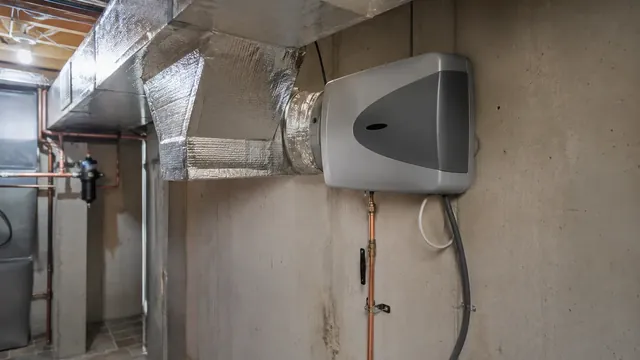
Michigan gives a cellar both humidity problems in the same year. Summer ambient humidity here regularly exceeds 85 percent, and winter heating cycles drive indoor air far below what a cork can tolerate. Ann Arbor Wine Cellars targets 60 percent relative humidity with an acceptable operating band of 55 to 70 percent, using active ultrasonic or steam-style inline humidification integrated into the duct system where the climate demands it. In northern climates that humidification is not optional during winter heating, it is the only way to stop cork desiccation.
Wine Cellar Humidity Control Systems Ann Arbor MI
Humidity gets far less attention than temperature and causes at least as many ruined bottles, because the damage happens through the cork rather than to the wine directly.
- Active humidification specified where winter heating dries the cellar
- Humidity held within the 55 to 70 percent band across the whole year
- Cooling system selected so it does not over-dry the room
- Sensor positioned to read the room, not the supply air
Below 50 percent relative humidity, natural cork begins to dry and shrink. As it shrinks the neck seal is compromised and the oxygen transmission rate into the bottle rises, which oxidises the wine slowly and irreversibly. Above 75 percent, labels degrade and mould spores including Penicillium species will grow on exposed wood and porous wall surfaces.
The usual approach
A cooling unit chosen purely on cooling capacity, stripping moisture out of a small cellar all winter until the corks in the top rows start to shrink.
How we do it
A system with humidity control designed in, holding 60 percent through both a Michigan August and a January heating cycle.
Humidity specification
- Target
- 60% RH
- Band
- 55-70% RH
- Cork damage threshold
- Below 50% RH
- Mould risk threshold
- Above 75% RH
What actually matters in humidity control
Humidity in a cellar is mostly a consequence of other decisions, which is why controlling it well starts with the cooling selection rather than with a humidifier.
- Every cooling system removes moisture as a side effect of cooling, so an oversized unit that short cycles will over-dry a room even without any deliberate dehumidification.
- Below-grade cellars in Washtenaw clay tend to run humid naturally, while above-grade rooms adjoining heated space tend to run dry, so the two need opposite interventions.
- Inline humidification in northern climates is a winter requirement rather than a year-round one, because the drying comes from the heating season rather than from the cooling.
- Sensor placement changes the reading substantially. A sensor near the supply grille reads the air the unit just produced, not the air the wine is sitting in.
Passive humidity management costs nothing extra when it is designed in, because it mostly comes down to correctly sizing the cooling so it does not over-dry the room. Active humidification is a separate equipment and plumbing cost.
Dehumidification is rarer and usually points at an underlying moisture source. Where a below-grade cellar genuinely runs above 75 percent, addressing drainage is normally cheaper over time than running a dehumidifier permanently.
Before we install humidity control
Humidity work benefits enormously from a few weeks of actual data, because the problem is seasonal and a single reading tells you very little.
- Log the cellar for two to three weeks before we specify anything, ideally with a cheap datalogger. Knowing whether the room runs dry in January or damp in July changes the solution entirely.
- Identify a water supply point if humidification is likely. Steam and ultrasonic units both need a small water feed, and finding one near the cellar is easier before the mechanical design is fixed.
- Check whether your cellar has ever had standing water. Persistent high humidity from groundwater is a drainage problem rather than a humidity control problem and gets solved differently.
- Note where you naturally look when you walk in. That is where the hygrometer should go, because instrumentation you have to hunt for does not get read.
Humidity and cooling capacity are linked.
Our cooling sizing guide explains why an oversized system produces a cold, dry cellar rather than a stable one.
How your wine cellar humidity control systems project works
Log the room
We record temperature and humidity across at least a few weeks so the humidity control system is designed against real data rather than one reading.
Identify the driver
We establish whether the room is being dried by the cooling, by winter heating, or wetted by groundwater, because each has a different fix.
Install and plumb
Humidification is integrated into the duct system with a proper water feed, or the cooling is reselected if over-drying is the cause.
Verify across seasons
We check the humidity control system again after the first seasonal change, since a system that works in July may need adjustment in January.
Wine Cellar Humidity Control Systems questions we get asked
What humidity should a wine cellar be?
Sixty percent relative humidity is the target, with anything between 55 and 70 percent being perfectly acceptable in practice.
The limits that matter are below 50 percent, where cork dries and shrinks, and above 75 percent, where labels degrade and mould can grow on porous surfaces.
Do I need a humidifier in my cellar?
In a Michigan basement, often not during summer, but frequently during winter. Heating season air is very dry and a cellar that sits at 60 percent in August can drop well below 50 percent in January.
Logging the room for a few weeks in each season is the only reliable way to answer this for your specific cellar.
Do I need to be present while you install humidity control?
Only for access. The work is usually confined to a mechanical space and the cellar itself and takes a day or two.
We will walk you through the controls before leaving, since humidity setpoints get adjusted seasonally more often than temperature does.
Do you offer free quotes for humidity control systems?
Yes. For humidity work specifically we usually recommend a logging period first, and we can lend you a datalogger for that rather than quoting blind.
Call 734-415-4984 to arrange it.
What happens if humidity is too low for a long time?
Corks dry, shrink and lose their seal against the bottle neck. Oxygen transmission into the bottle increases, and the wine oxidises slowly. You will often see this first as bottles with slightly depressed fill levels.
The damage is not reversible, which is why the dry winter months matter more than most people realise.
Will screwcap wines be affected by low humidity?
No, screwcap and synthetic closures are unaffected by humidity, since there is no natural cork to dry out.
If your collection is entirely screwcap, humidity control matters far less. Most serious collections are not, which is why we still design for 60 percent by default.
What goes wrong, and what we do instead
Humidity gets less attention than temperature and ruins at least as many bottles, because the damage happens through the cork.
| The mistake | What it causes | What we do instead |
|---|---|---|
| Cooling selected on capacity alone | A small cellar over-dried all winter until top-row corks shrink | Select cooling that holds temperature without stripping moisture |
| A single humidity reading used to specify | A system that suits July and fails in January | Log the room across weeks before specifying anything |
| Sensor placed at the supply grille | Readings that do not reflect where the wine actually sits | Sensor positioned in the body of the room at bottle height |
Hold 60 percent through both Michigan seasons
Let us log your cellar for a few weeks and design against what it actually does.