Cellar types and styles
Modern & Contemporary Wine Cellars in Ann Arbor, MI | Steel, Glass and Cable, Precisely Set
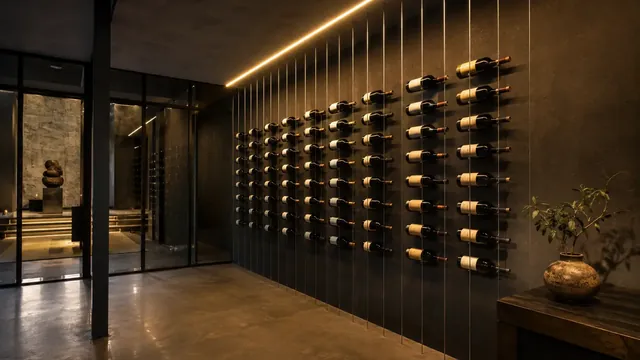
Contemporary cellars remove almost everything, which means what remains has to be perfect. Ann Arbor Wine Cellars builds modern cellars in blackened steel, tensioned cable, anodised aluminium and polished concrete, where there is no trim, no scribe moulding and nowhere to hide a tolerance. Lighting is linear and warm at 2700K or below, emitting no ultraviolet and adding no measurable heat to the room. The engineering underneath is identical to a traditional cellar. The difference is that every fixing, joint and reveal is visible.
Modern Wine Cellars Ann Arbor MI
Minimal design is unforgiving. A traditional cellar hides a 6mm discrepancy behind a scribe. A modern one puts it in a reveal where you will see it every time you walk in.
- Setting out surveyed and confirmed before any steel is fabricated
- Linear LED at 2700K or lower, zero UV, no heat gain into the room
- Transformers and drivers mounted outside the thermal envelope
- Concealed fixings throughout, with reveals dimensioned rather than assumed
Lighting is the single most important element in a contemporary cellar because there is so little else. We use sealed micro-cove runs, IP65 damp-rated recessed fittings where the location requires it, and magnetic low-voltage transformers placed outside the cellar envelope so their heat never enters the conditioned space. Ultraviolet output has to be zero, since UV degrades wine through the glass.
The usual approach
Off-the-shelf strip lighting with drivers mounted inside the cellar, adding heat to the room the cooling unit is trying to remove, at a colour temperature that makes the wine look grey.
How we do it
Sealed micro-cove runs at 2700K with zero UV, drivers mounted outside the envelope, and light levels set to make the glass read warm.
Contemporary specification
- Lighting
- LED, 2700K or lower
- UV output
- Zero
- Drivers
- Mounted outside thermal envelope
- Fixings
- Concealed, reveals dimensioned
What actually matters in a modern cellar
Contemporary cellars fail on execution rather than concept. The design intent is usually simple. Delivering it at the tolerances the look demands is where the work is.
- Structural fixing points for steel and cable systems must be located before wall finishes go on, because there is no trim to cover a misplaced anchor in a minimal design.
- Any LED driver or transformer inside the cellar adds heat directly to the conditioned space, which is why we mount them outside the envelope even though it is more work.
- Ultraviolet output degrades wine through clear and green glass alike, so UV-free specification is a functional requirement rather than an aesthetic one.
- Polished concrete and exposed steel have almost no acoustic absorption, so a minimal cellar is a notably loud room to stand in and often benefits from one soft surface.
Contemporary cellars cost more per bottle than traditional timber ones, and the reason is fabrication rather than materials. Steel and cable systems are made to measure, and the tolerance required by a trimless design means more time in setting out and more time in installation.
Lighting is a larger share of a modern cellar budget than most people expect, often approaching the cost of the racking, because the fixtures are architectural rather than domestic and the driver locations add electrical work.
Before we build your contemporary cellar
Modern cellars need more decided up front than traditional ones, because there is no forgiving trim stage at the end where things get reconciled.
- Choose your metal finish before fabrication, not after. Blackened steel, anodised aluminium and powder coat all behave differently under warm light, and a sample viewed in daylight will mislead you.
- Agree the reveal dimension in writing. The gap between a steel upright and a concrete wall is a design decision in a minimal cellar and it needs to be a number, not a preference.
- Confirm the wall substrate can take the anchor loads. Cable and cantilevered steel systems concentrate force at a few points, and a stud wall may need steel backing plates installed before finishing.
- Decide how you feel about visible fasteners. Fully concealed fixing is achievable but constrains the system, and some clients prefer the honesty of an exposed machined fastener once they see both.
Lighting choices affect the cooling load.
Our cooling sizing guide covers internal heat gains, including why driver placement matters more than fixture wattage.
How your modern & contemporary wine cellars project works
Survey and set out
Every dimension is surveyed and confirmed before fabrication, because a modern cellar has no trim to absorb a discrepancy.
Structure and backing
Anchor points, steel backing plates and driver locations are all installed while walls are still open.
Fabrication and finish
Steel, cable and aluminium components are fabricated to the surveyed dimensions and finished before delivery.
Install and light
Components are set to the agreed reveals, then the lighting is aimed and dimmed to suit the contemporary cellar before handover.
Modern & Contemporary Wine Cellars questions we get asked
Does LED lighting harm wine?
Correctly specified LED does not. The two things that damage wine are heat and ultraviolet, and a good LED fixture at 2700K or below produces negligible amounts of either inside the cellar.
The heat that does exist comes mostly from the driver, which is why we mount those outside the conditioned space.
Is metal racking as good as wood?
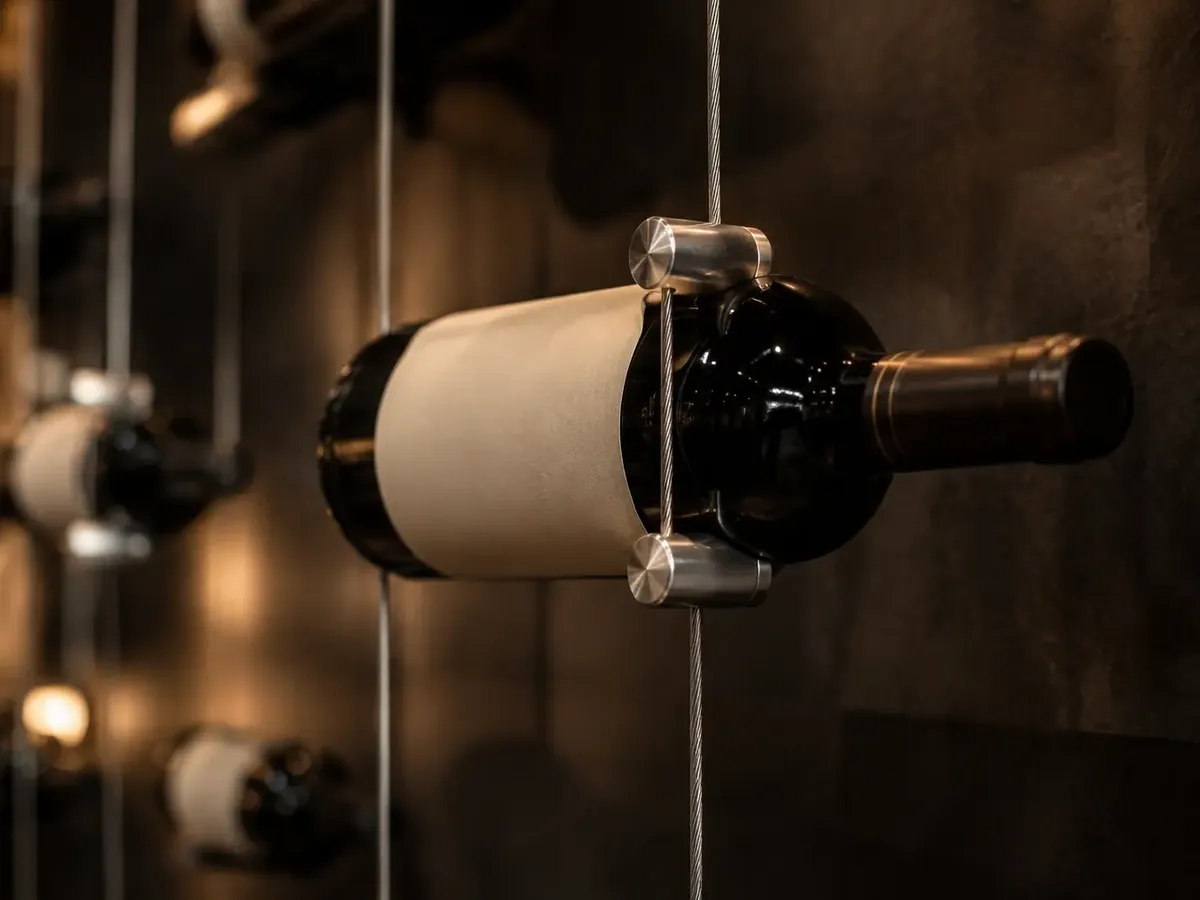
For the wine, yes. Anodised aluminium pins and stainless cable hold bottles horizontally just as well as timber, keeping the cork wet and the bottle stable.
The practical differences are visual and acoustic. Metal systems display labels forward, which many collectors prefer, and they reflect more sound than a timber rack wall does.
Do I need to be present while you build my modern cellar?
Not during construction, but we do ask you to approve a physical finish sample and a mocked-up reveal before fabrication. Photographs are genuinely misleading on metal finishes.
That is a single appointment and it prevents the most expensive kind of change.
Do you offer free quotes for modern wine cellars?
Yes. Contemporary quotes take slightly longer to prepare because fabricated components need to be priced from a drawing rather than a catalogue.
Call 734-415-4984 and we will start with a site visit and a conversation about the look you want.
Can a modern cellar work in an older Ann Arbor house?
It can, and the contrast is often the best thing about it. A minimal steel and glass cellar set inside an 1890s fieldstone basement reads deliberately rather than accidentally.
The practical caution is that older masonry is rarely flat or plumb, which makes a trimless installation harder and usually means an independent internal structure.
How much does the exposed hardware need maintaining?
Very little. Anodised aluminium and stainless cable need occasional dusting and nothing else. Blackened steel benefits from a light wax once a year to keep the patina even.
Cable systems should have tension checked annually, which takes minutes and is part of our maintenance visit.
What goes wrong, and what we do instead
Minimal cellars fail on execution rather than concept, because there is no trim to absorb a discrepancy.
| The mistake | What it causes | What we do instead |
|---|---|---|
| Setting out taken from drawings rather than survey | Reveals that vary visibly along a wall in a trimless design | Every dimension surveyed and confirmed before fabrication starts |
| LED drivers mounted inside the cellar | Waste heat added directly to the room the cooling is working on | Drivers and transformers mounted outside the thermal envelope |
| Anchors located after the wall is finished | Fixings landing in drywall with no structure behind them | Backing plates positioned while walls are still open |
Minimal, and correct to the millimetre
We survey before we fabricate, so the reveals you agree are the reveals you get.